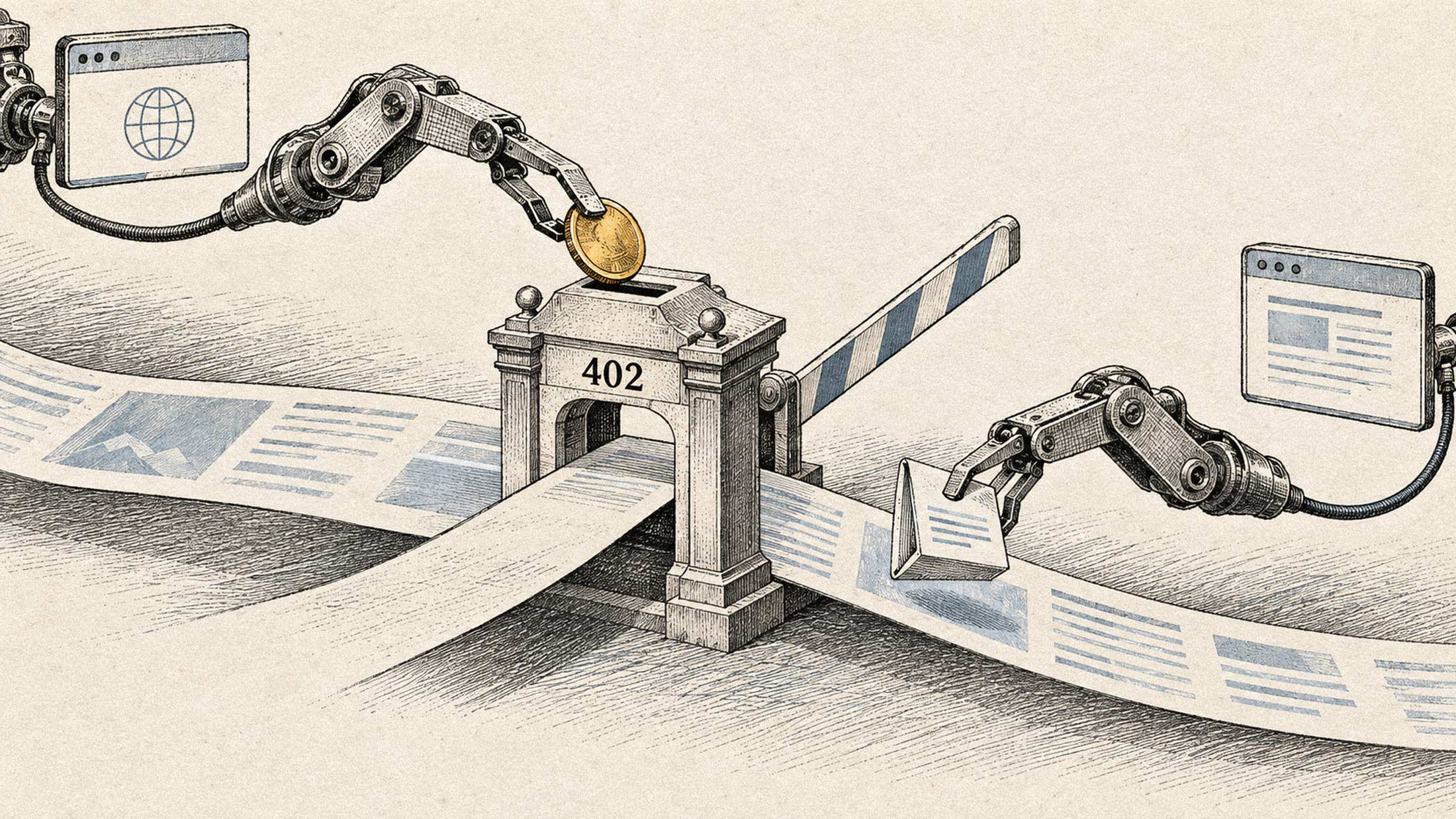
The HTTP 402 "Payment Required" status code was defined in 1992 and then abandoned. No decentralized digital currency existed to make it useful. The code sat in the spec, reserved for a future that never arrived.
That future is here. A crop of protocols and toolkits now use 402 as the trigger for machine-to-machine payments, and AI agents are the primary beneficiaries. When an agent requests a gated resource, the server responds with 402 and a structured payment challenge. The agent pays, retries with proof, and gets the data. No signup, no API key, no human clicking through a checkout page.
The implication is large. If agents become the interface layer through which humans do their day-to-day shopping, every app and website will need to speak this language. The protocols below are already positioning to become essential infrastructure.
1. L402 and Wavelength (Lightning Labs)
Wavelength, released in alpha on July 21, 2026, is the most complete developer-facing implementation of L402, Lightning Labs' protocol for Bitcoin-native 402 payments. The toolkit lets developers add self-custodial Bitcoin and Lightning payments to any app through a simple API. No nodes to run, no channels to manage.
Wavelength exposes its API to AI agents through the Model Context Protocol (MCP), now the standard way agents connect to external tools. Agents can hold balances and pay for API calls in fractions of a cent. Wallet credentials are kept outside the agent channel, so private keys never touch the model.
The L402 flow itself is elegant: the server responds with 402 plus a token and Lightning invoice; the client pays, receives a preimage, and presents both to unlock the resource. The server verifies without querying a payment database. Lightning Labs calls this "stateless verification," and it matters for scale.
2. x402 (Coinbase / Linux Foundation)
x402 is an open standard created by Coinbase that uses stablecoin payments (primarily USDC) over HTTP 402. It defines three headers (PAYMENT-REQUIRED, PAYMENT-SIGNATURE, PAYMENT-RESPONSE) to carry challenges, credentials, and receipts. Settlement happens on Base, Ethereum, Solana, and other networks.
Cloudflare's Agents SDK now ships with first-class x402 integration, including server-side middleware and client-side wrappers that handle 402 automatically. CoinGecko has already turned on x402-gated endpoints priced at fractions of a cent per request. The protocol moved to the Linux Foundation with backing from Google and Stripe.
3. Machine Payments Protocol (Stripe / Tempo)
MPP launched March 18, 2026, alongside Tempo's mainnet. Co-authored by Stripe and Tempo, MPP wraps the 402 handshake in lifecycle-aware machinery: sessions that let agents pre-authorize spending limits, subscriptions, and streaming micropayments. It supports stablecoins on Tempo, cards via Stripe, and Bitcoin via Lightning.
MPP is backwards-compatible with x402, meaning MPP clients can consume existing x402 services without modification. Stripe says businesses can accept MPP payments in a few lines of code through its PaymentIntents API.
4. Agentic Commerce Protocol (OpenAI / Stripe)
ACP takes a different angle. Rather than pure machine-to-machine micropayments, it standardizes checkout flows between AI agents and merchants for human-present commerce. Released September 29, 2025, ACP powers ChatGPT's Instant Checkout and works with Shopify and Etsy. The trade-off: it doesn't natively address micropayments or stablecoin-native settlement.
5. Agent Payments Protocol (Google / AP2)
AP2 is an open protocol developed by Google with more than 60 organizations including Adyen, Mastercard, PayPal, and Coinbase. It works as an extension of Google's Agent2Agent protocol and MCP. AP2 focuses on verifiable intent, using cryptographic credentials to prove that a human actually authorized the spend. The initial version supports credit and debit cards, with stablecoins and real-time bank transfers on the roadmap.
Developer Resources
Several MCP servers and SDKs now make 402 integration practical, with public resources like 402MCP.org providing up-to-date ranking for the various emerging solutions. PayMCP is a provider-agnostic payment layer supporting x402, two-step flows, and subscriptions. The x402-list-mcp package exposes a directory of x402-enabled services to agents. And for Bitcoin-native payments, L402.tech offers agent tools that wire into Claude Code, Cursor, Codex, and other coding assistants.
The question of who controls agent spending remains open. But the plumbing is settling into place.