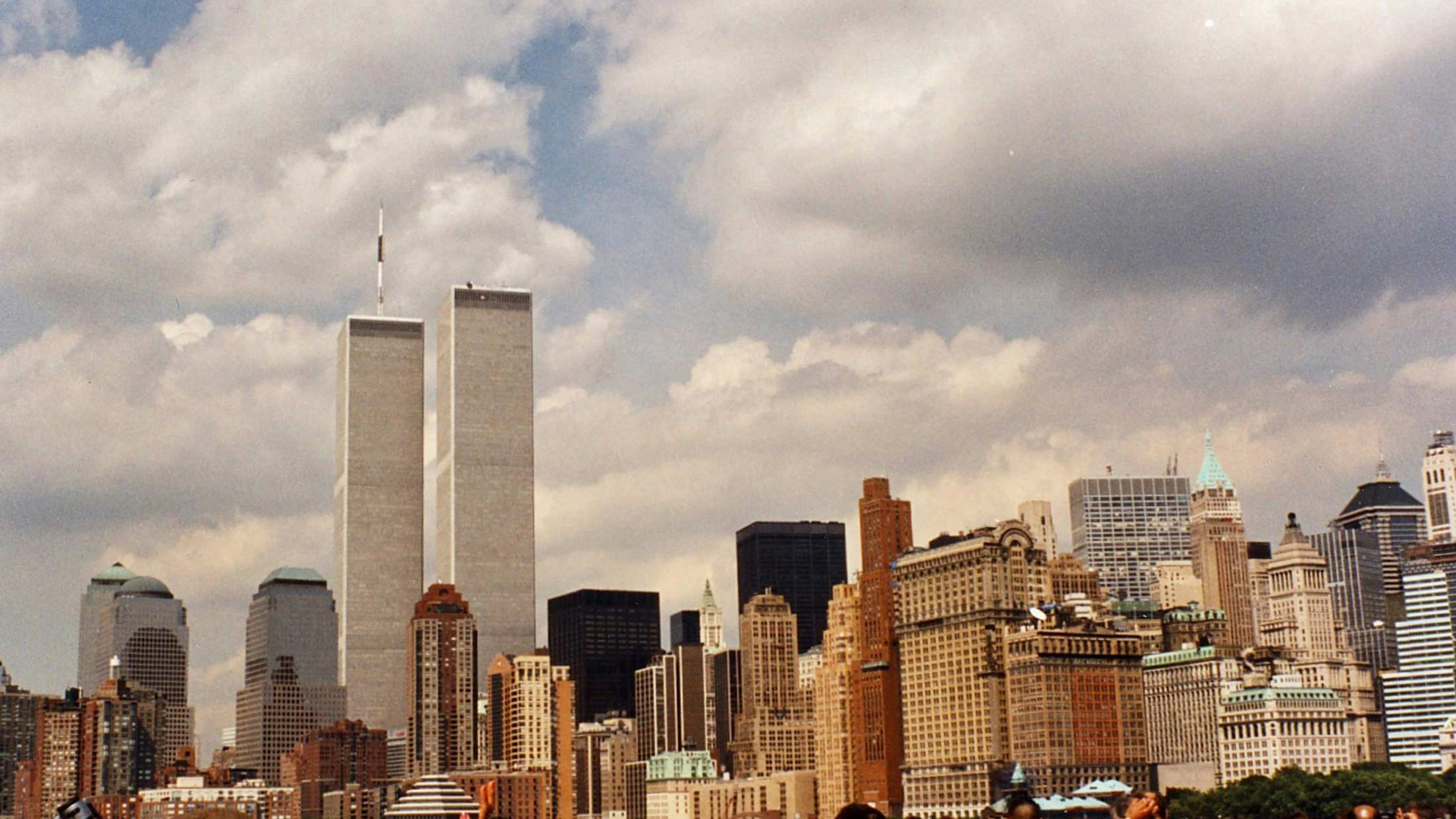
On the morning of September 11, 2001, most Americans had dial-up internet connections. Smartphones did not exist. Social media had not been invented. Cell phones were clunky devices used mainly for calls, and making one from Lower Manhattan that morning was nearly impossible because networks immediately collapsed under the load. Journalists covering the Pentagon attack relied on Motorola pagers to transmit short text updates. Twitter, Facebook, and Instagram were years away.
Twenty-five years later, everything about how we live, communicate, and are tracked has changed. But so too has our government's ability to watch us. And the legal architecture that made that possible was erected in the weeks and months after those towers fell.
The Legal Foundation
The USA PATRIOT Act was introduced less than a week after the attacks and signed into law by President George W. Bush on October 26, 2001. According to the Electronic Frontier Foundation, the act "broadly expands law enforcement's surveillance and investigative powers and represents one of the most significant threats to civil liberties, privacy, and democratic traditions in U.S. history." It amended more than fifteen existing statutes, expanding wiretapping authority, allowing delayed-notice warrants, and giving the government sweeping new powers to collect electronic communications.
The bill passed with almost no debate. The ACLU described it bluntly: "Just six weeks after the September 11 attacks, a panicked Congress passed the 'USA/Patriot Act,' an overnight revision of the nation's surveillance laws that vastly expanded the government's authority to spy on its own citizens." Many of its provisions had been on law enforcement wish lists for years but had been previously rejected by Congress.
Within fourteen months, an even larger change followed. The Department of Homeland Security was established in November 2002, consolidating 22 federal agencies under a single cabinet department. It was the largest federal reorganization since the creation of the Department of Defense after World War II.
The Transportation Security Administration had already been created two months after the attacks. Before 9/11, airport security was handled by private contractors. Travelers could bring blades up to four inches onboard. Family members could accompany passengers to the gate. Today's rituals of removing shoes, surrendering liquids, and submitting to body scans all trace back to that November 2001 legislation and subsequent security incidents.
The Surveillance That Followed
The infrastructure built after 9/11 proved durable. Joint terrorism task forces and fusion centers brought federal, state, and local agencies into closer intelligence-sharing networks. Police departments acquired technologies that once belonged only to national security agencies. Automated license plate readers began tracking where people drive. Facial recognition systems could identify people in crowds.
Then came Edward Snowden. In 2013, the former NSA contractor leaked classified documents revealing the PRISM surveillance program, which collected electronic data from companies including Microsoft, Google, Facebook, Apple, and Skype. The NSA was not only collecting metadata but also content from communications globally. In September 2020, a federal court ruled that aspects of the mass surveillance program Snowden exposed were illegal and possibly unconstitutional.
But perhaps the more significant shift was cultural. The expansion of government surveillance powers coincided with Americans beginning to carry smartphones, joining social media, and living increasingly online. We generate more digital information about ourselves than any intelligence agency could have dreamed of collecting in 2001. As one researcher put it, agencies expanded their ability to collect intelligence after 9/11 precisely as technology started producing more information about people than ever before. Gregory Nojeim of the Center for Democracy & Technology described the post-9/11 era as a "perfect storm" of expanded legal powers combined with technological tools to collect information from more people in more contexts.
The Energy Calculation
The attacks also reshaped energy policy, though more slowly. In his 2006 State of the Union address, President Bush warned that "America is addicted to oil." Before 9/11, dependence on foreign oil was a concern. After, it became a security imperative. The Middle East supplied a significant portion of U.S. imports, and that dependence constrained foreign policy options.
The transformation took decades, but the shale revolution changed the calculus entirely. U.S. crude oil production surged from about 5 million barrels per day in 2008 to over 13 million barrels per day by 2023, making America the world's largest oil producer. The country became a net energy exporter for the first time since the 1950s. The geopolitical leverage that Middle Eastern oil states once held over American policy has diminished substantially.
What Persists
The surveillance architecture built after 9/11 has become permanent infrastructure. Once law enforcement agencies invest in technology and incorporate it into their work, researchers note it becomes difficult to roll back. What was emergency response became standard procedure.
We now live in a world where facial recognition, AI-driven analysis, and pervasive data collection are unremarkable. The question of whether this makes us safer has no clean answer. The question of whether it has changed what privacy means in America answers itself. Most people under 30 have no memory of moving through an airport without removing their shoes. The surveillance state is no longer visible as such. It is simply how things work.