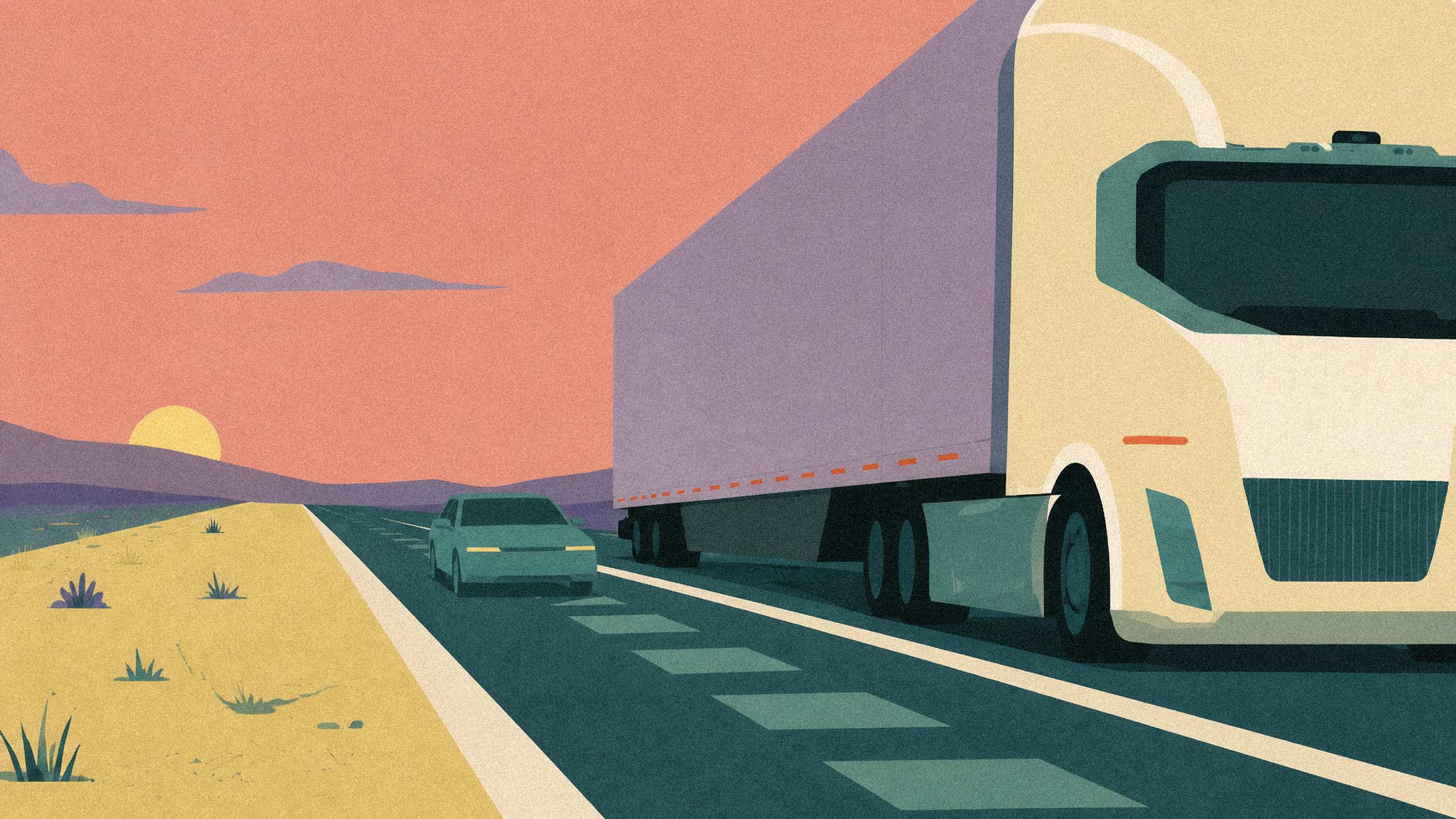
Aurora Innovation just announced it will deploy a new fleet of driverless trucks based on the International LT Series platform, equipped with second-generation commercial hardware designed to last a million miles at more than 50 percent lower cost than the previous kit. The company says it expects to exit 2026 with more than 200 driverless trucks operating across the Sun Belt.
That number may sound modest against the 3.6 million professional truck drivers currently navigating American highways. But the trajectory matters more than the count. Aurora has already logged over 250,000 driverless miles with zero at-fault collisions, tripled its driverless network to ten routes, and validated a 1,000-mile corridor stretching from Fort Worth to Phoenix that far exceeds federal hours-of-service limits for human drivers. The company expects to begin operating these trucks without any human observer in Q2 2026.
The Supply Chain Argument
Aurora's pitch to shippers is straightforward. The industry faces a persistent driver shortage that estimates peg at 60,000 to 80,000 positions in 2025, with projections reaching beyond 100,000 within a few years if current trends hold. Freight volumes are projected to grow fivefold between 2010 and 2050, according to Aurora's own materials. Long-haul trucking in particular suffers from a turnover rate above 90 percent at many large carriers, driven by punishing schedules, time away from home, and the physical toll of the job.
Routes like Fort Worth to El Paso are notoriously difficult to staff. A human driver cannot legally complete the 600-mile trip in a single shift under hours-of-service regulations. An autonomous truck can run that lane without stopping for rest, without detention pay disputes, without scheduling around a driver's home time. For carriers like Hirschbach Motor Lines and Werner, which have signed on as early Aurora customers, the economics pencil out clearly.
The second-generation hardware Aurora is deploying features lidar sensors that detect objects at 1,000 meters, double the range of the previous kit, and enhanced sensor cleaning systems for harsh weather operation. The hardware is manufactured by Fabrinet, and the company is building the first 25 trucks internally before shifting upfit work to Roush at a rate of 20 trucks per week by Q3 2026.
What Happens to Truckers
The flip side of this efficiency story is harder to ignore. A UC Berkeley Labor Center report estimated that up to 294,000 long-distance trucking jobs face high risk of displacement from autonomous technology. A separate study by University of Michigan and Carnegie Mellon researchers found that autonomous trucks could eventually affect up to 94 percent of long-haul operator hours under certain deployment scenarios.
The Teamsters union has been unambiguous in its opposition. Teamsters president Sean O'Brien told Congress last July that autonomous vehicles represent "a threat to safety on our roadways and the existence of good jobs in the trucking industry." The union is fighting bills in California, Texas, Nevada, and other states to require trained human operators in all autonomous trucks.
Aurora CEO Chris Urmson, in a December interview with Axios, rejected the Teamsters' position. He argued that trucking is "a very dangerous job" with health and quality-of-life problems, suggesting autonomous technology represents an improvement rather than a displacement. The company currently uses a human observer in its trucks at the request of manufacturing partner PACCAR, but plans to remove that observer for its International LT fleet in Q2.
The debate is not purely binary. Some analysts suggest that transfer hub models, where autonomous trucks handle highway segments while human drivers complete local deliveries, could preserve a portion of trucking employment. Bureau of Labor Statistics data shows that automation typically changes tasks within jobs rather than eliminating entire occupations.
But the quality of those preserved jobs matters. Research suggests that while last-mile delivery positions may expand, they often pay less than the long-haul routes they replace. A 2022 study found that displaced truckers would struggle to find alternative work at comparable wages, particularly given that only about 7 percent hold college degrees.
Regulatory Battleground
California's DMV adopted new regulations this week allowing AV manufacturers to apply for permits to test and deploy heavy-duty autonomous trucks on state roads. The Teamsters have vowed to take the fight to court. Meanwhile, federal policymakers are weighing national standards that would override state regulations. Urmson says he's seeing "a lot of positive signals" from the current administration, citing supportive comments from Transportation Secretary Sean Duffy.
Aurora expects to achieve positive free cash flow by 2028. It posted $1 million in Q1 2026 revenue and a $244 million operating loss. The company is betting that scale will eventually compress those losses into profitability. Whether that scale comes at the expense of hundreds of thousands of middle-class jobs remains an open question with no clean answer.