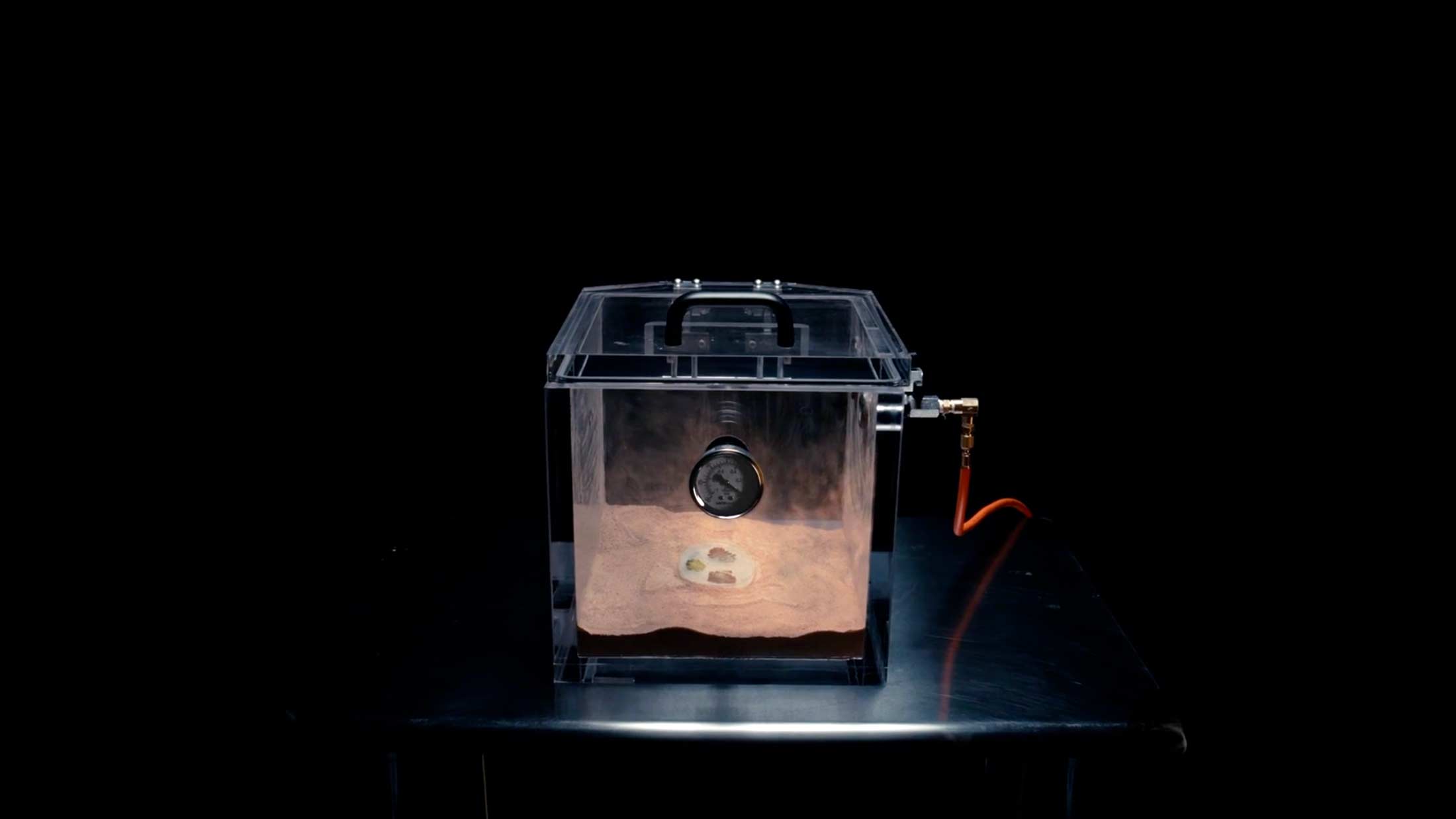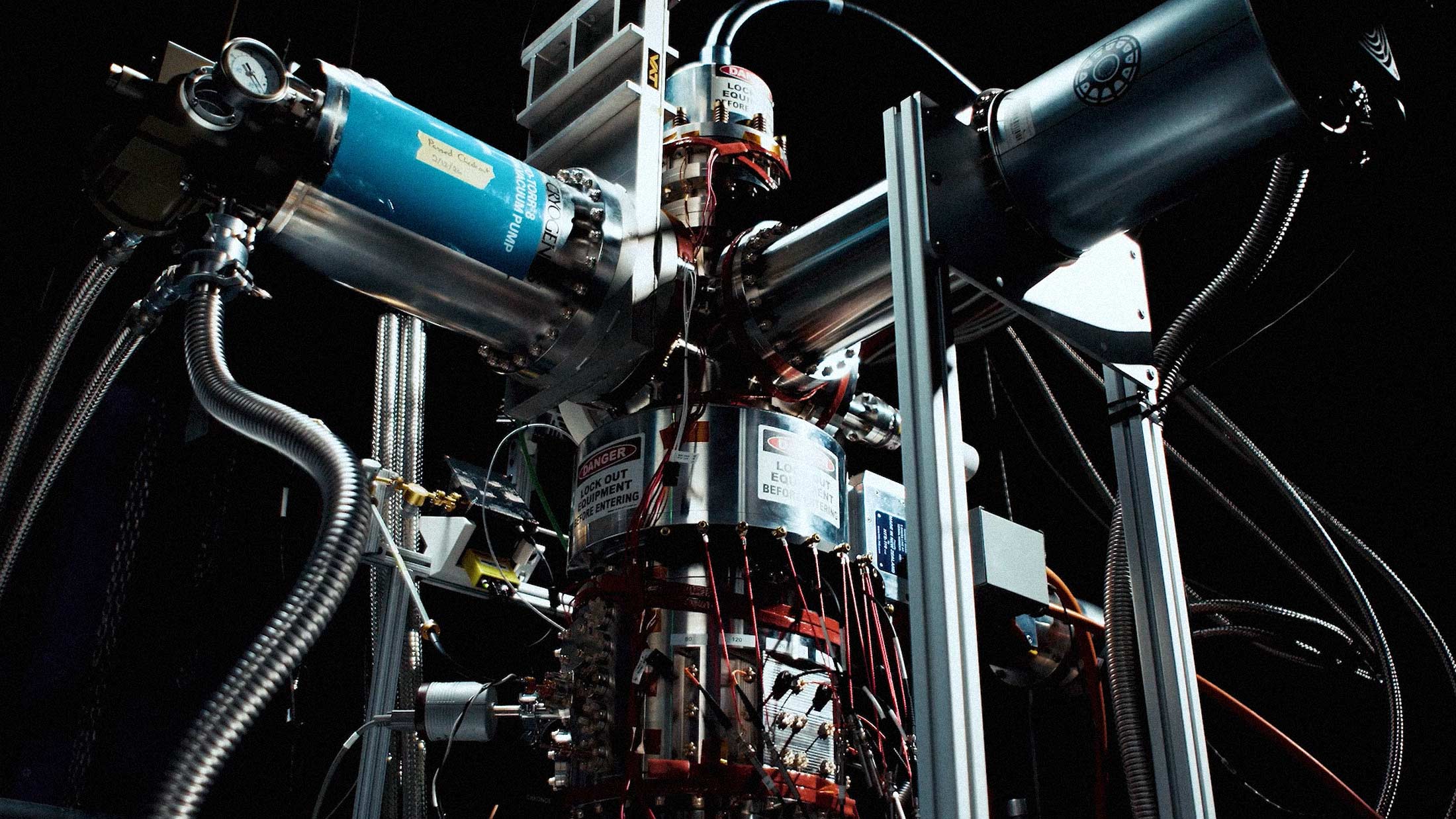
Avalanche Energy has introduced Lando, its sixth-generation compact fusion machine, and the device represents what may be the most compelling argument for why small-scale fusion development could outpace the billion-dollar tokamak projects that have dominated the field for decades.
The Seattle startup is currently working with two compact fusion prototypes: Jyn and the slightly larger Lando, named after Star Wars' protagonists Jyn Erso and Lando Calrissian. According to the company, Lando delivers four times the plasma volume of its predecessor, faster plasma spin-up, three times the diagnostic capability, and is licensed for high neutron yield reaching 10 billion neutrons per second.
Every machine we build is an incremental step in learning, not just in science, but also in how to build it and how to operate it. Read More: https://t.co/DMm2xSEewl
— Avalanche Energy (@AvalancheFusion) May 13, 2026
“Lando”, our Gen. 6 machine, is the latest in Avalanche’s fusion machine lineage: larger, faster, cleaner, more… pic.twitter.com/2zV4ATjI2e
The Rapid Iteration Model
The fusion industry has traditionally operated on geological timescales. More than 200 tokamaks have been built since the 1960s, the largest and most ambitious of which is the roughly $25 billion ITER project still being constructed in southern France. Despite being proposed in 1985, ITER is not projected to be operational until 2035.
Avalanche takes a different approach. The company's design cycles move in days instead of years, giving it unusual speed in refining its compact modular fusion machines. The startup says its small design allows it to iterate designs in days, build hardware onsite, and apply fusion energy to applications from lunar surface power to transportation to the deep sea. The company designs, builds, tests, breaks, and learns fast.
This philosophy mirrors what worked in aerospace, and Avalanche's founders came from Blue Origin, where they worked on rocket propulsion. The Seattle-based startup is betting that smaller is smarter, pursuing micro-fusion reactors compact enough to sit on a desk, driven by a conviction that fast iteration and modular design will deliver results faster than conventional approaches. Their strategy hinges on building, testing, and revising quickly, much like how early space startups approached rocket development.
What Makes the Orbitron Different
Where other fusion companies need powerful magnets to generate energy, Avalanche's design uses intense electrical currents to draw fast-moving ions into tight orbits around an electrode. As the density and speed of the ions rises, they begin to collide and fuse, releasing energy in the process.
The company has achieved a critical high-voltage milestone: sustaining 300,000 volts across just two and a half inches of space, equating to an average electric field gradient of over 4.7 megavolts per meter. That field strength rivals some of the steepest natural voltage gradients on Earth, exceeding even lightning, and does so in steady-state using just 3 watts of power.
The fusion core can be held in your hands, and fully integrated could fit in a pickup bed. The implications are significant. Small fusion reactors can be mass produced in a factory, almost like automotive manufacturing.
From Jyn to Lando: Building Knowledge
Lando incorporates specific improvements over Jyn: the ability to remove plasma impurities for higher performance, cleaner data generation from enhanced instrumentation, and faster machine access for quicker experimental turnaround. Each machine Avalanche builds represents accumulated learning in both science and operations.
By achieving high electric field strength with minimal power draw, Avalanche is proving the foundational physics and engineering behind its Orbitron architecture. The team hopes its next fusion machine will hit the sought-after target of Q greater than one, which is when more energy is produced by the plasma than was put into it.
Revenue Before Breakeven
Unlike competitors chasing grid-scale power, Avalanche is not yet aiming at the power grid, and that is by design. The company argues that early fusion applications should mirror how technologies like GPS, MRIs, and even the Internet evolved, starting with defense.
With that sort of force, Avalanche expects it will be able to generate a large number of neutrons at low cost, which can be used to make radioisotopes and to evaluate materials for use in fusion reactors. Sales of radioisotopes and rentals of the FusionWERX facility should make Avalanche profitable in 2028, with the company forecasting $30 million to $50 million in revenue in 2029.
The company recently secured a $5.2 million contract from the DARPA Rads to Watts program to develop next-gen technology for compact, resilient nuclear batteries. FusionWERX will operate under a broad-scope radioactive materials license with advanced tritium handling capabilities when fully licensed and operational, expected in 2027, and will provide critical testing infrastructure for fusion technologies while serving as the site for Avalanche's own net-energy compact fusion test program.
The Broader Significance
Compact reactor architectures could offer simpler designs if they mature successfully. The global fusion landscape today resembles early aviation: many designs, rapid iteration, and uncertainty about which configurations will ultimately dominate.
Avalanche has raised $29 million in February 2026 led by RA Capital Management after achieving plasma physics breakthroughs. The private investment brings the startup's total funding to $105 million across investors and government grants.
Whether Lando or any of its successors will achieve net energy remains an open question. But the approach itself, building smaller machines and iterating rapidly while generating near-term revenue from neutrons and testing services, represents a fundamentally different bet on how to solve one of engineering's hardest problems. Avalanche is unique among companies in the fusion space in its ability to rapidly iterate to improve and advance its compact modular technology as well as its ability to generate near-term revenue prior to energy break-even.
The company's ambitions in space power and data center applications align with broader infrastructure demands. Whether the physics cooperates is another matter entirely.