Google Quantum AI has launched REPLIQA, a $10 million research initiative that aims to apply quantum computing and artificial intelligence to the life sciences. The program, announced by Google Quantum AI founder Hartmut Neven, partners with five universities: the University of Arizona, UC San Diego, UC Santa Barbara, Harvard, and MIT.
REPLIQA stands for Research Program at the Intersection of Life Sciences & Quantum AI. The initiative targets one of science's persistent challenges: understanding biological processes at the molecular level. According to the University of Arizona, the program will leverage quantum science and AI to enable researchers to observe cellular processes with unprecedented precision and simulate molecular interactions that exceed the capabilities of standard computers.
The Convergence Thesis
The premise underlying REPLIQA is that life may have evolved to exploit quantum mechanical phenomena in ways science is only beginning to grasp. Tomás Díaz de la Rubia, the University of Arizona's senior vice president for research and partnerships, put it directly: "We are at a rare inflection point where quantum science and artificial intelligence are converging in ways that could redefine what is knowable in the life sciences."
The Arizona team is led by Dante Lauretta, a Regents Professor who also serves as principal investigator for NASA's OSIRIS-REx asteroid sample return mission. That connection matters. Lauretta's experience with analyzing materials from the asteroid Bennu gives him a track record in uncovering fundamental processes in complex natural systems. He described the initiative as offering "the rare opportunity to apply the same rigor we use in space exploration to the microscopic frontier of the cell."
Where Quantum Meets Biology
The life sciences application of quantum computing has been gaining traction across the industry. IBM recently ran a competition where researchers used quantum processors to simulate key processes in photodynamic cancer therapy. Work at Stanford and Michigan State has demonstrated quantum algorithms for modeling ATP and GTP hydrolysis, the biochemical reactions that power most cellular processes. These are not marginal technical exercises. They represent early proof points that quantum hardware can contribute to biological research at a meaningful scale.
Google's own quantum biology interests predate REPLIQA. Neven himself ventured into quantum biology as early as 2014, designing neurotransmitters using isotopes and quantifying their effects on neuroreceptors. More recently, he has initiated research to test whether quantum processes play a role in conscious experience. The REPLIQA initiative extends this interest into a broader academic collaboration.
What This Signals for the Sector
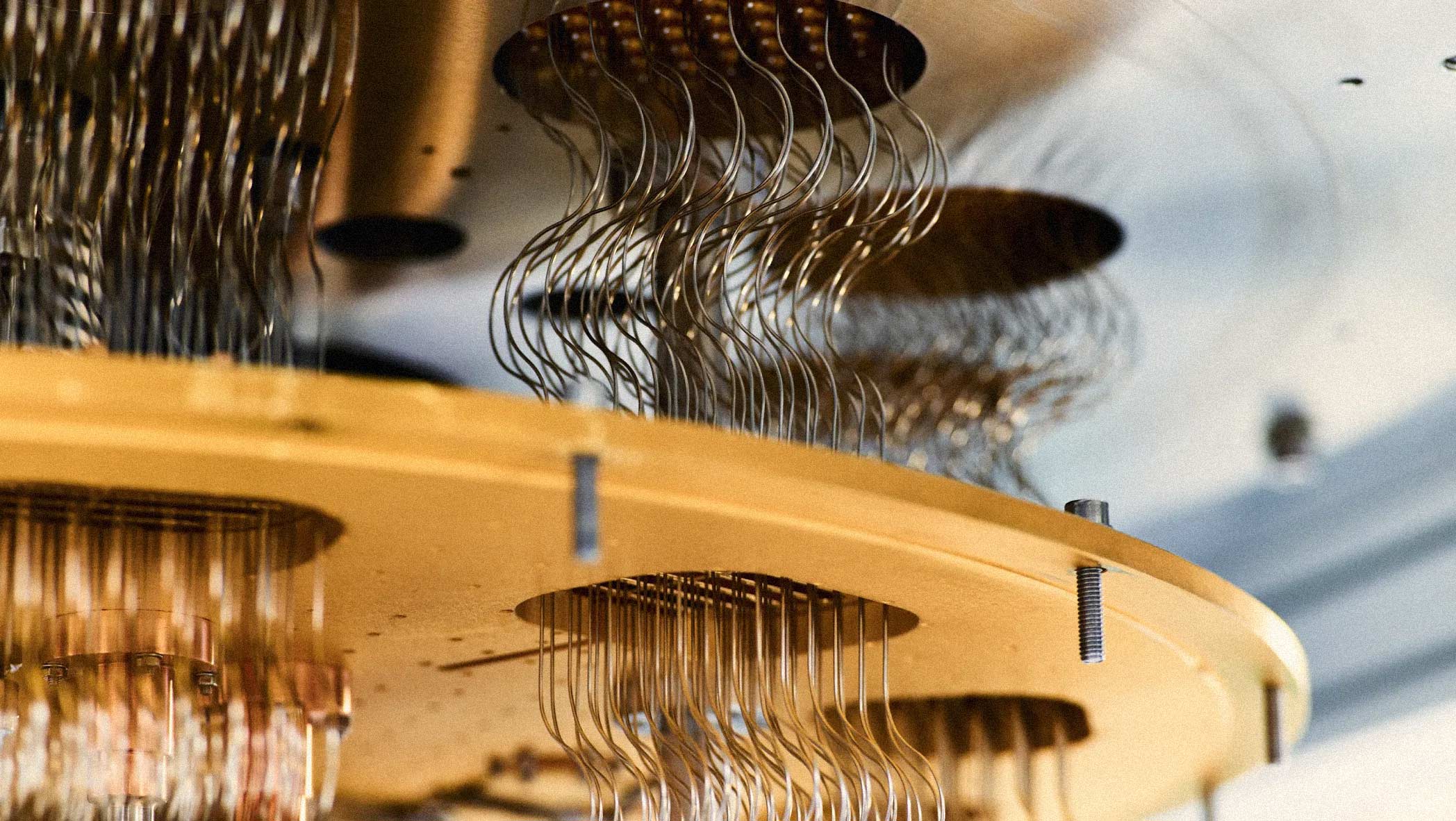
The timing is notable. Google is already pursuing a dual-track approach to quantum hardware, developing both superconducting qubits and neutral atom systems. The company has stated it expects commercially relevant quantum computers based on superconducting technology to become available by the end of this decade. REPLIQA positions Google to have the biological applications research ready when the hardware catches up.
The $10 million commitment, while meaningful, is not enormous by big tech standards. Google.org has separately funded a $20 million AI for Science initiative supporting 12 organizations working on problems ranging from genomics to fusion energy. What REPLIQA signals is strategic focus: Google sees quantum biology as a specific domain worth cultivating through dedicated academic partnerships.
For drug discovery and biotech, the implications are longer-term. Current quantum hardware can handle molecules with a few dozen atoms. Simulating the kinds of large, complex biomolecular systems relevant to drug design requires fault-tolerant quantum computers that do not yet exist. But the trajectory matters. Research published in Nature and other journals has shown quantum approaches can already match or exceed classical methods for certain molecular simulations. The gap is closing.
REPLIQA represents a calculated bet that quantum computing will eventually transform how we understand cellular biology. The universities involved bring deep expertise in both quantum physics and life sciences. The program is funded through Google.org, which handles the company's philanthropic and research support activities. Whether this bet pays off depends on progress in quantum hardware and algorithm development over the coming years.