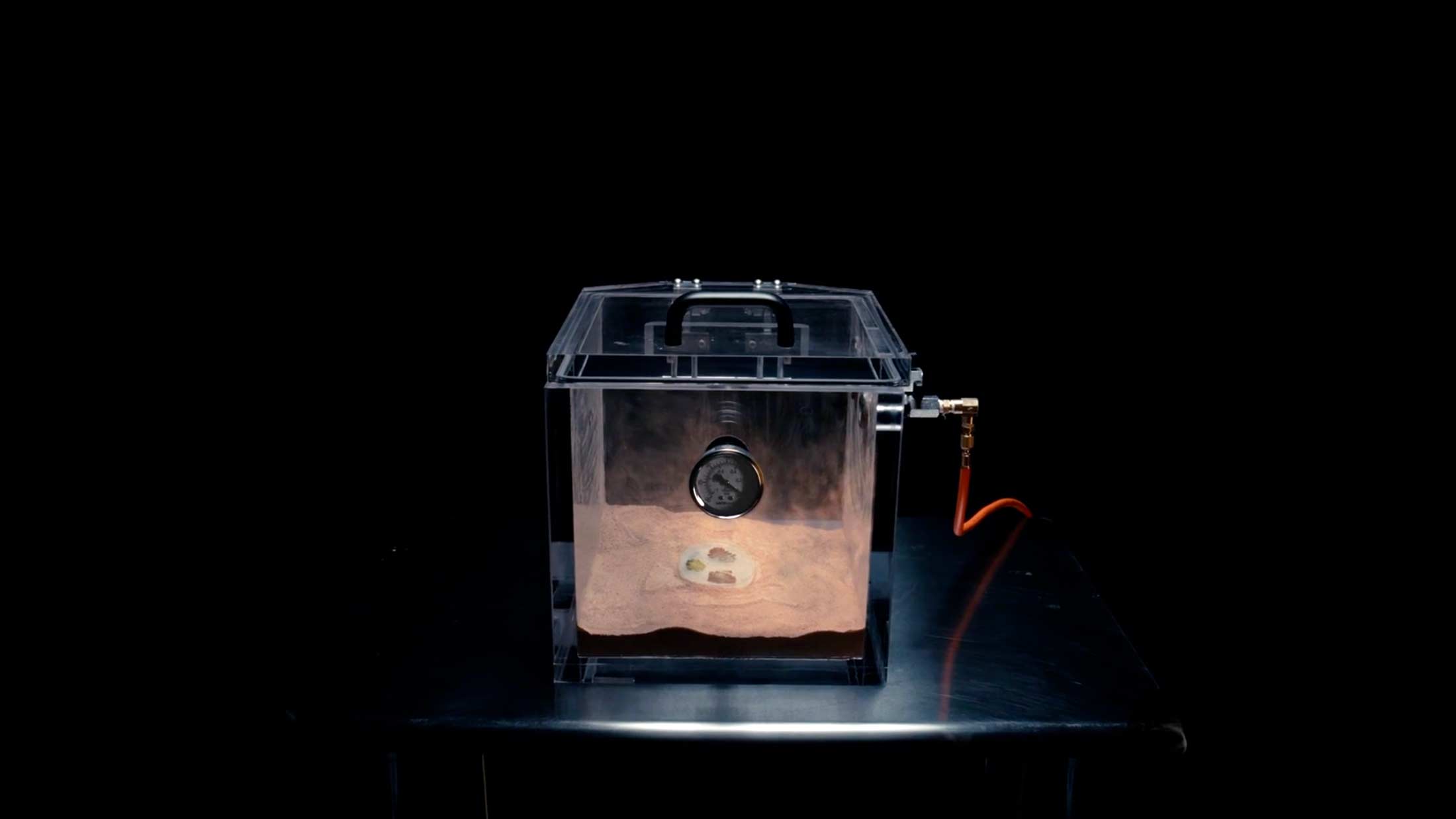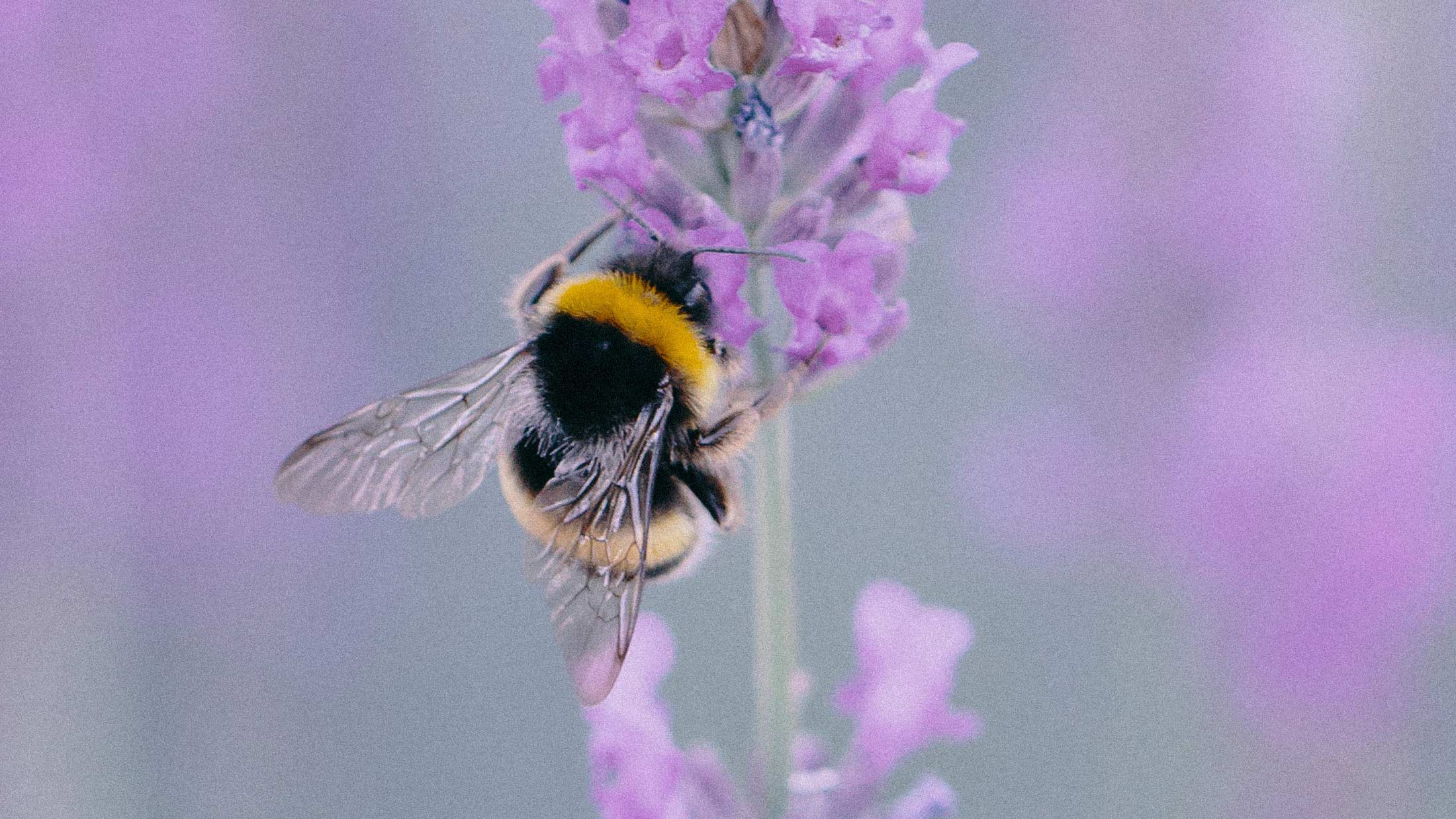
A viral video from Cambridge University captured something strange: honeybees in a laboratory container falling out of the air the moment the lights switched off. No gliding, no controlled descent. They dropped like rocks.
The footage, recorded by PhD researcher Hamish Symington, sparked internet fascination and a straightforward question: why would an insect simply stop flying rather than attempt a safe landing? The behavior appears counterintuitive. Falling seems more dangerous than continuing to fly for a few seconds.
Fun to play a small part in this new work led by Tsevi Beatus and team: when the lights go off, honeybees simply stop flying and fall!
— Orit Peleg (@oritpeleg) May 22, 2026
(unlike flies and mosquitoes, which pull off smart maneuvers)
Thanks to Richard Terrile for turning the lights off on bees, for science 🐝🪰🦟 pic.twitter.com/nYs2Pu7Cif
The Visual Dependency Problem
Honeybees navigate using polarized light from the sun as a compass. Their compound eyes detect patterns of light polarization that guide them over distances of hundreds or thousands of meters between hive and foraging sites. When that visual information disappears, their navigation system doesn't degrade gracefully. It fails completely.
Research into bee vision has shown that honeybees regulate flight speed by monitoring optic flow, the apparent motion of objects passing through their visual field. They steer by balancing flow signals between their two eyes, avoiding collisions by veering away from regions generating strong image motion. In darkness, all of this stops working.
The immediate cessation of flight may actually be a safety mechanism. One theory holds that it functions as a "navigational locking" response: if conditions become suddenly disorienting, better to drop than to fly blind into predators or obstacles. In evolutionary terms, a short fall onto vegetation is survivable. Flying into a tree is not.
Not All Insects Respond the Same Way
The research becomes more interesting when compared across species. Bumblebees exhibit both behavioral and retinal adaptations for dim light conditions, reducing flight speed rather than halting entirely. Tethered hornets similarly slow down in low light. The nocturnal sweat bee Megalopta genalis approaches its nest at constant speed across a wide range of light intensities, though its approaches become increasingly erratic in darkness.
Some tropical bee species, representing roughly one percent of known bee species, have evolved specialized visual systems for night flight. The Megalopta sweat bee possesses compound eyes with an optical sensor approximately 27 times more sensitive than that of the European honeybee. These species can navigate using landmarks even in light intensities more than 100 million times dimmer than daylight.
Fruit flies present a different case entirely. Drosophila melanogaster raised for more than 1,500 generations in complete darkness at Kyoto University, a project spanning decades, show genetic adaptations including altered circadian rhythms and changes in pheromone signaling. Evolution can accommodate darkness, but it takes a long time.
Implications for Drone Development
The divergent insect responses to darkness offer a natural experiment for engineers designing autonomous flight systems. Bio-inspired drones have already borrowed heavily from insect vision, using optic flow navigation to regulate speed and avoid obstacles.
Researchers at TU Delft have developed insect-inspired navigation strategies that combine odometry with visual snapshots, enabling tiny drones to travel 100 meters on just over one kilobyte of memory. French researchers at Aix-Marseilles University built a bee-inspired flying robot using optic flow navigation that could eventually augment traditional accelerometer-based stabilization.
The honeybee's binary response to darkness, flight or no flight with nothing in between, represents a limitation that drone designers must account for. Vision-dependent systems need fallback modes for low-light conditions. One approach, demonstrated by a micro-drone called BAT (Blind Autonomous Tiny-drone), uses LIDAR and self-emitted optical flow to explore environments in total darkness.
Another line of research looks to bats rather than bees. The PeAR Bat, developed at Worcester Polytechnic Institute, uses ultrasonic echolocation rather than vision, allowing navigation through smoke-filled or debris-heavy environments where light has limited penetration.
The Broader Design Question
The honeybee's instant drop in darkness reveals something fundamental about how tightly coupled its flight control is to continuous visual input. There is no internal model running independently, no dead reckoning that can sustain flight for even a second without feedback. This architecture is extremely efficient for a brain the size of a sesame seed operating in predictable daylight conditions. It is catastrophically fragile outside those parameters.
For autonomous systems designers, the lesson is clear: any navigation strategy built on a single sensory modality inherits that modality's failure modes. The most resilient insects are those that combine multiple strategies. The most resilient drones will likely follow suit, fusing vision with other sensors rather than depending on any one input.
Bees evolved for a world with a sun that reliably appears each morning. Drones operate in warehouses, tunnels, burning buildings, and forests. The organisms that work best in those environments will probably look less like honeybees and more like the hybrid systems already emerging in robotics labs.