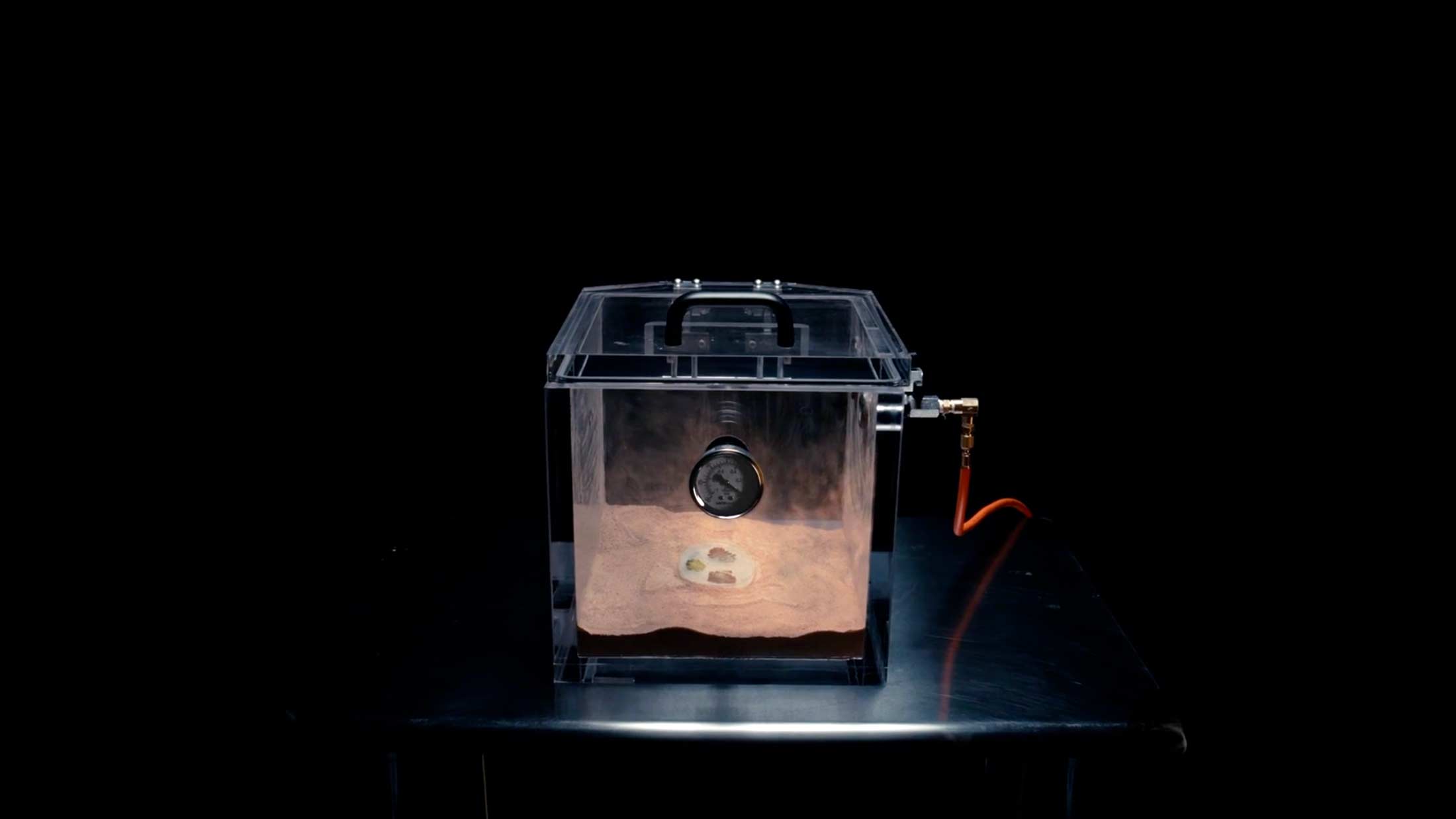
A startup in Campbell, California believes it has solved a problem that has frustrated metallurgists for decades: how to make plasma-based metal refining economically viable. Radify Metals claims its hydrogen cold-plasma reduction process can transform metal oxides into pure metals with water vapor as the only byproduct. If it works at scale, the implications for supply chains and industrial policy are significant.
The Missing Middle
"The unfortunate part is that in order to be able to support an entire industrial base, you've got to have that whole supply chain node-matched in terms of capacity," CEO and co-founder Zach Detweiler told TechCrunch. He sees a gap in the supply chain that has been overlooked: the step that turns metal oxides into pure metals. "That's this missing middle we've identified."
The process itself is relatively straightforward in concept. Hydrogen is heated until it becomes plasma inside a reactor, metal oxide powder is introduced, and a reduction reaction strips away the oxygen. Pure metal emerges on the other end. The same equipment can process different metals by adjusting operating conditions.
The core technology uses hydrogen cold-plasma reduction, operating at temperatures between 500 and 1,000 degrees Celsius, with water as the only byproduct. Radify has built a proof-of-concept reactor to demonstrate the approach.
Traditional metal refining uses either heat or chemical processes to strip oxygen from metal oxides. Both methods work, but both pollute heavily. Plasma-based reduction has been known as an alternative for some time, but was always considered too expensive for commercial production. Radify says it has addressed the cost problem through improvements in power electronics efficiency and powder handling technology.
Founders and Funding
The company was founded in 2025 by Zach Detweiler and Dan Bullard. Detweiler holds a PhD in materials chemistry; Bullard is a PhD metallurgist with decades of experience in metal alloys, heterogeneous catalysis, additive manufacturing, and metals startups. Detweiler previously worked on scaling metal additive manufacturing for aerospace and defense, while Bullard specializes in plasma metallurgy and process scale-up.
The startup has raised just under $3 million from investors including Overture, Founders Inc., Mana Ventures, and Acequia Capital. The five-person team is refining the technology in its lab in Campbell and hopes to produce several kilograms of pure metal per day by the end of this year. The next step is a pilot reactor capable of producing up to 100 kilograms daily.
The China Factor
The timing matters. China accounted for roughly 60% of global rare earth mining output in 2024 and dominates the separation and refining stages at about 91% of global production. In response to U.S. tariffs, China introduced export controls on seven heavy rare earth elements in April 2025, followed by a second wave in October 2025 that added five more REEs along with related products, equipment, and technologies.
The early effects were immediate. Many automakers in the U.S. and Europe struggled to obtain permanent magnets after export volumes fell sharply in April and May 2025, with some forced to cut production or temporarily shut down factories. Even after trade volumes recovered, rare earth prices in importing countries remained elevated, with European prices reaching up to six times Chinese levels.
The 12-month suspension of China's expanded rare earth export controls is set to expire on November 10, 2026. China's licensing infrastructure has been suspended rather than removed, and key controls remain active. The window for building alternative supply chains is narrow.
What Radify Can and Cannot Do
Radify's reactor can transform a range of metal oxides. Today, the company is focused on dysprosium and samarium, two rare earth elements essential for magnets and electronics. Beyond rare earths, Radify is exploring hafnium, uranium, scandium, and titanium for applications in electronics, aerospace, and other sectors.
The plasma-based technology also works on more common metals like iron and aluminum, though the company acknowledges it is not yet efficient enough to challenge existing production methods in high-volume markets.
Rare earths outside China currently sell for several times Chinese prices. Detweiler expects Radify can initially produce at prices about 50% above China's, with the goal of reaching parity or lower as production scales. The modular reactor design offers one potential advantage: if prices for a specific rare earth collapse due to Chinese market manipulation, Radify could switch production to other metals like titanium or zirconium.
That flexibility sounds good on paper. Whether Radify can actually execute at industrial scale remains unproven. The company's claims about cost reductions through improved power electronics and powder handling need validation under real production conditions. This is a micro-factory play for a market that has historically rewarded massive scale.
Still, the geopolitical pressure to develop non-Chinese rare earth processing is real. China controls approximately 90% of global rare earth processing, along with dominant shares in tungsten (80%) and antimony (60%). The processing stage remains the principal bottleneck. While multiple countries mine rare earths, most material continues to be refined in China before entering downstream supply chains.
Radify is not the only company working on this problem, and three million dollars is a modest sum for deep-tech metallurgy. But if the technology works, and if the company can find offtake partners willing to pay a premium for supply chain security, there is a path here. The company's business model involves selling metal output directly to clients and securing multi-year offtake agreements, with plans to co-locate modular reactor systems at mining operations or magnet factories.
The November 2026 deadline looms. Radify is betting it can help fill a gap before China decides to tighten the grip again.