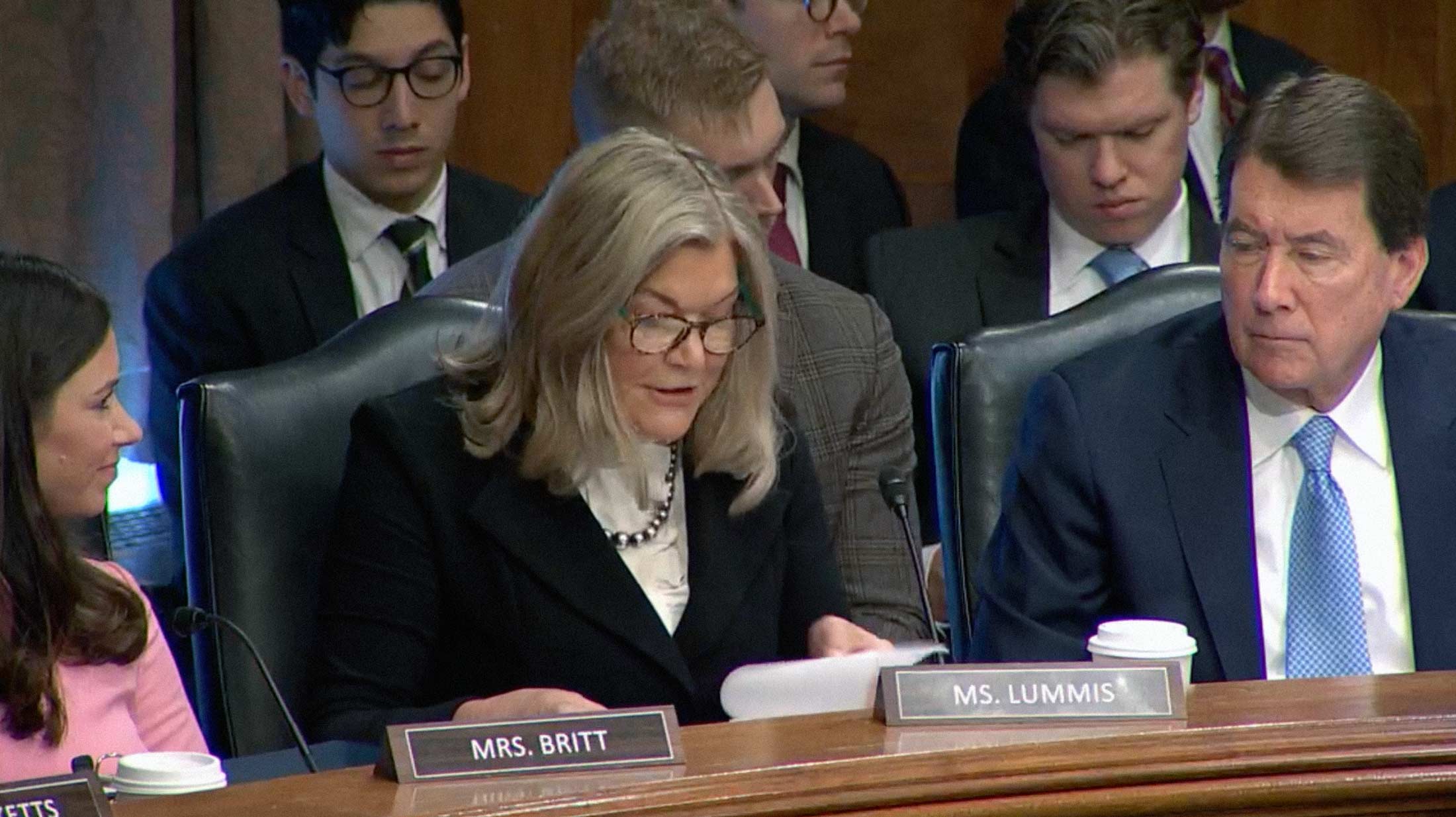
The Senate Banking Committee's markup of the Digital Asset Market CLARITY Act is advancing toward a final vote after a grinding session that has stretched past five hours. Republicans have cleared the major amendments phase with their caucus holding firm at 13 united votes, and a procedural vote to advance the bill out of committee appears imminent.
The most significant development of the session so far: the core stablecoin yield compromise passed 15-9, securing four Democratic crossover votes. A separate portfolio margining amendment from Senator Dave McCormick passed with overwhelming bipartisan support at 18-6.
Multiple Democratic amendments aimed at tightening restrictions on DeFi developers, adding national security provisions, and imposing additional constraints failed along party lines at 11-13. Chairman Tim Scott has been dismissing last-minute amendments citing drafting errors, clearing procedural obstacles for what appears to be a straight path to advancement.
What The Bill Actually Does
The CLARITY Act establishes clear rules separating which digital assets are securities and which are commodities, ending the jurisdictional confusion between the SEC and CFTC that has plagued the industry. The 309-page legislation represents the most comprehensive federal framework for digital assets ever to reach serious Senate consideration.
The draft legislation aims to provide clear jurisdictional boundaries between the SEC and CFTC, a point of friction that has created uncertainty for years. For Bitcoin, the draft explicitly classifies it as a digital commodity, placing it under the primary oversight of the CFTC.
The bill requires digital asset exchanges, brokers, and dealers to comply with Bank Secrecy Act regulations, including anti-money laundering programs, suspicious activity reporting, and sanctions compliance. The legislation protects software developers who publish code without controlling customer funds and preserves Americans' ability to self-custody their digital assets.
The Stablecoin Yield Compromise
The stablecoin provisions have been the legislation's central battleground for months. Senators Thom Tillis and Angela Alsobrooks released a bipartisan compromise text on May 2, clearing the most contested single point in the crypto market structure debate. The compromise bans stablecoin issuers from paying yield or interest on stablecoin balances in a manner that is economically or functionally equivalent to a bank deposit. It explicitly protects activity-based reward programs, allowing platforms like Coinbase and Circle to continue offering rewards for platform participation, governance activity, and ecosystem utility.
That compromise held today. The 15-9 passage represents a notable bipartisan margin, suggesting the bill may have more Democratic runway than the party-line fears indicated.
The Opposition
Senator Elizabeth Warren said the Clarity Act "is just not ready" in her opening remarks. "We could be working right now on changes in the law that would help bring down prices and help unrig our economy, you know, we could be working on capping credit card interest rates," she said. "But instead of that, we're spending our time working on a bill written by the crypto industry for the crypto industry."
A Warren amendment that would remove sections 401, 402 and 402—addressing some bank activity around digital assets—failed 11-13. The minority staff released a national security advisory this morning arguing the legislation fails to address illicit finance vulnerabilities.
What Happens Next
If the committee advances the bill today, it faces a challenging path forward. The lawmakers will vote on whether or not to advance the bill to the full Senate. The bill still has a lengthy journey to becoming a law; if the Banking Committee does advance the bill, it will have to be merged with the Senate Agriculture Committee version of the legislation, debated and voted on the Senate floor, reconciled with the House version, and voted on in that chamber of Congress before it can go to the president's desk.
So far, the progress through the Senate has been dependent on Republican party-line voting, but other crypto efforts have typically reached major bipartisan support when the final votes come around. Last year, the GENIUS Act succeeded on a 68-30 vote in the Senate, easily clearing the 60-vote minimum.
Congress heads into Memorial Day recess on May 21. Senator Lummis has been direct about the timeline: miss the May window and the bill realistically waits until 2030.
Markets are reacting. Bitcoin jumped above $81,000 as the Senate Banking Committee holds its key hearing. The committee's procedural vote should arrive within the hour. For more on recent regulatory developments, see our previous coverage of the May 14 vote and related developments in Bitcoin recovery.