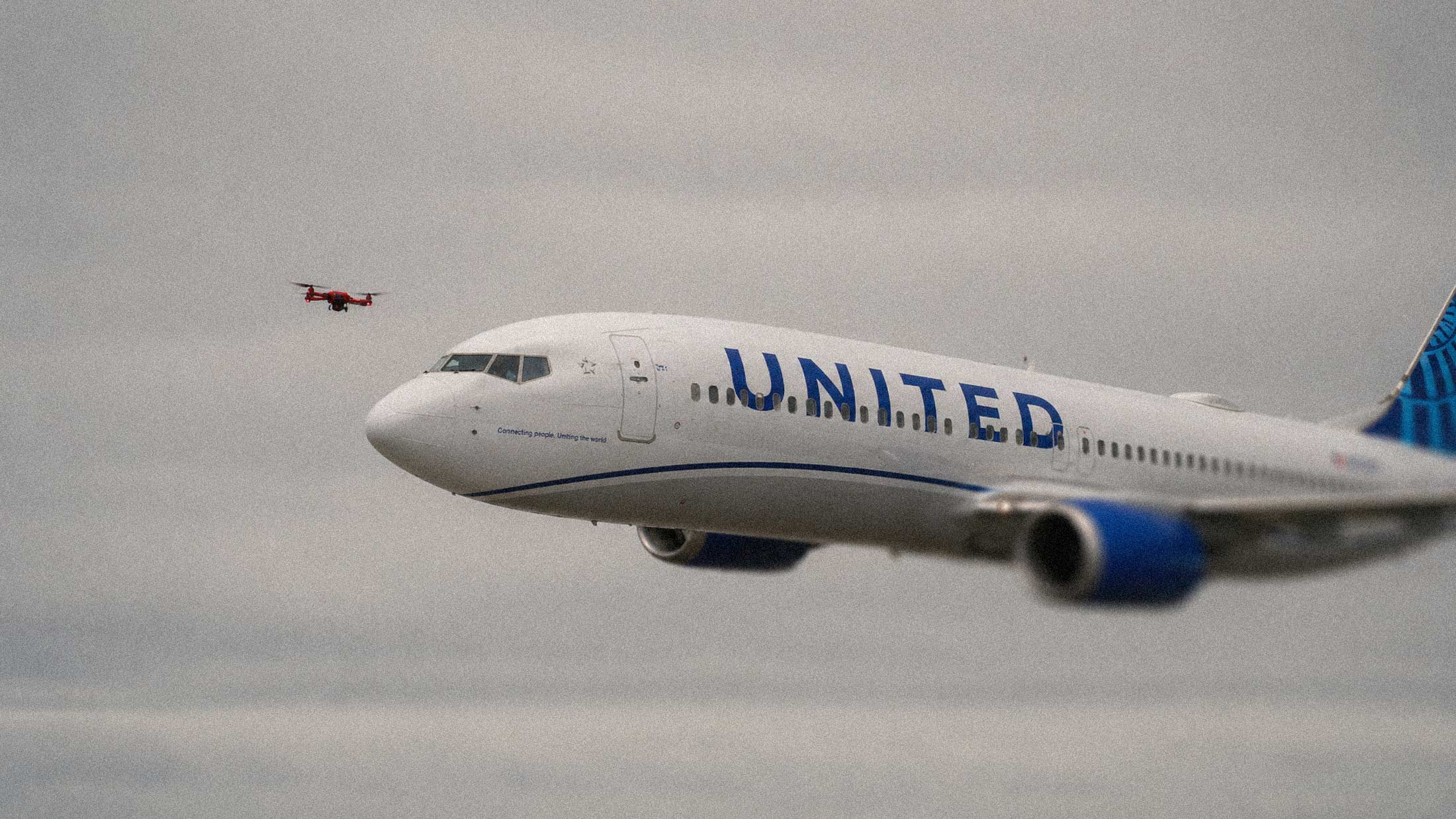
United Airlines Flight 1980, a Boeing 737 traveling from San Francisco, struck what the crew described as a drone at approximately 3,000 feet while on approach to San Diego International Airport this morning. The flight landed safely around 8:30 a.m., and all 48 passengers and six crew members deplaned normally. United's maintenance team found no damage after inspecting the aircraft.
Audio captured by the ATC App and posted on social media recorded the pilot's exchange with ground control. When asked to describe the object, the pilot said it was small, red, and shiny. The FAA confirmed it is investigating.
The altitude is the story. Federal regulations generally prohibit drones from flying above 400 feet without FAA authorization. Most consumer drones ship with firmware that enforces that ceiling. A drone operating at 3,000 feet in controlled airspace near a major airport is either the product of a manufacturer with lax compliance, or it's been modified to exceed those limits.
Consumer Hardware Doesn't Do This
As one user put it on X: "A red drone at 3000 feet? Doesn't seem like normal consumer hardware." They're right. DJI's Mavic line, the most popular consumer quadcopter series in the country, is programmed to stay below 400 feet by default. The same goes for most major brands. Getting a drone to 3,000 feet requires either specialized equipment designed for industrial or military use, or a custom build with altitude restrictions deliberately bypassed.
This isn't a hobbyist straying into the wrong patch of sky. Someone flew a drone into the approach path of a commercial airliner at seven times the legal altitude, in restricted airspace, near one of the country's busiest single-runway airports. The question isn't whether regulations were broken. It's whether regulations can meaningfully prevent this from happening again.
The Asymmetry Problem
An Associated Press analysis of NASA's Aviation Safety Reporting System found that drones accounted for nearly two-thirds of reported near-midair collisions involving commercial aircraft at the 30 busiest U.S. airports in 2024. That was the highest share since 2020, when pandemic-era flight reductions skewed the data. Over the past decade, drones were involved in 122 of 240 reported near-miss incidents, or roughly half the total.
The FAA receives more than 100 reports of drone sightings near airports each month. It estimates that more than a million drones are operating across the United States for recreational and commercial purposes.
The problem is structural. Protecting airport airspace from unauthorized drones requires detection, identification, and neutralization capabilities that most airports don't have. The FAA is testing off-airport drone detection systems, but widespread deployment remains years away. DJI removed its geofencing restrictions in January 2025, meaning its drones no longer automatically prevent users from entering restricted airspace. Pilots now receive a warning instead of a hard block.
This is the asymmetry that makes drone incursions so difficult to address. A $500 quadcopter can disrupt a $100 million aircraft. A single bad actor with a modified drone and a grudge could force delays across an entire hub. Worse, if drones begin to be perceived as a genuine threat to air travel, the same technology reshaping tactical reconnaissance could reshape how ordinary passengers think about flying.
What Comes Next
No catastrophic collision between a drone and a commercial airliner has occurred in the U.S. yet. Experts warn that even a small drone could cause serious damage if it struck an engine, cockpit, or control surface. The January 2025 collision between a military helicopter and a commercial jet near Washington, D.C., which killed 67 people, served as a grim reminder that congested airspace is unforgiving.
This morning's incident in San Diego ended without injury or damage. The next one might not. The FAA's investigation will likely focus on identifying the drone's operator. The harder question is what the agency, airlines, and airports plan to do about the growing gap between drone capabilities and the infrastructure meant to keep them in check.