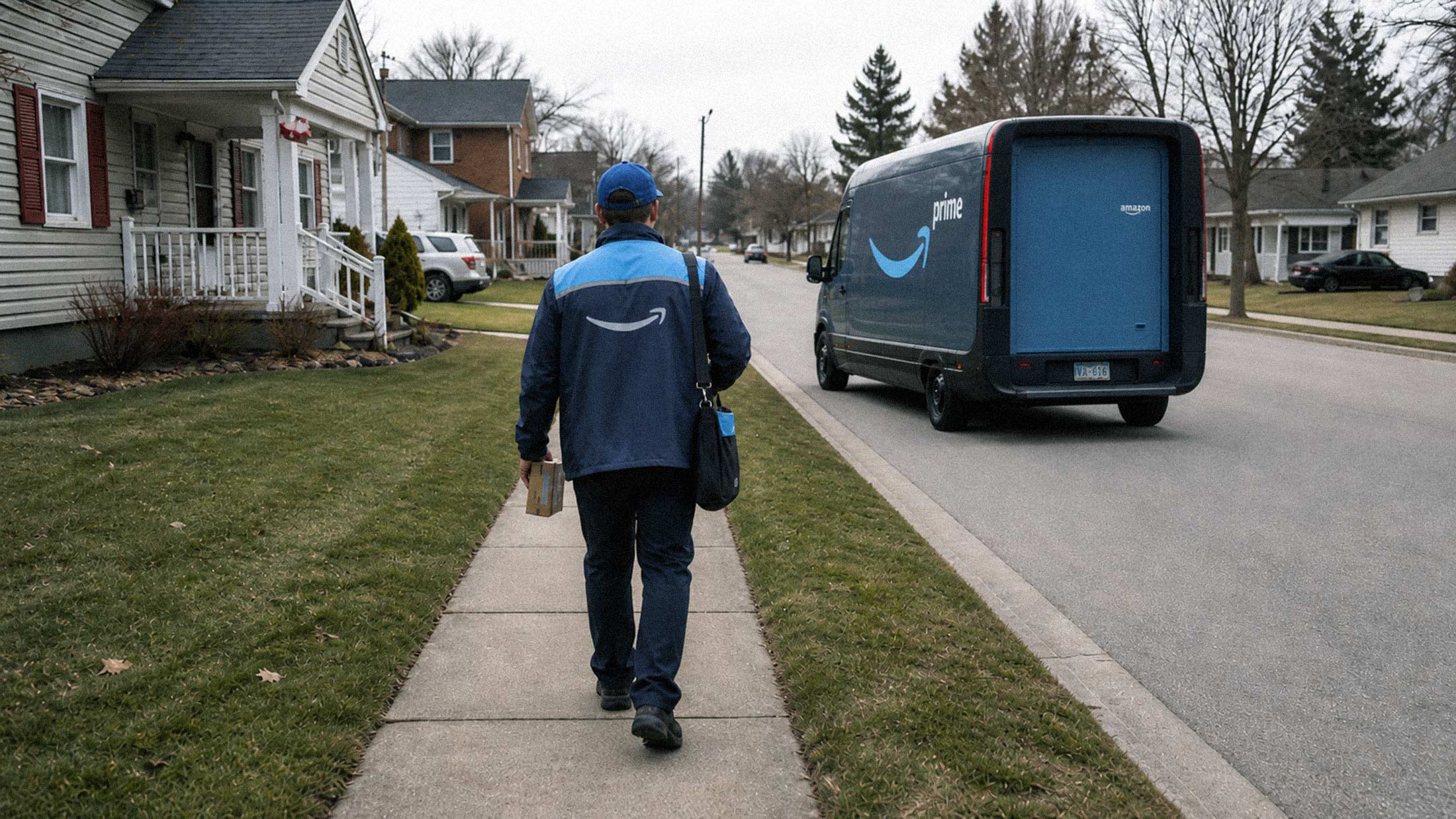
Amazon today announced Amazon Supply Chain Services (ASCS), opening its freight, distribution, fulfillment, and parcel shipping capabilities to businesses of all types and sizes. The move extends the logistics infrastructure that has powered Amazon's retail dominance to any company willing to pay for it.
The company is drawing a direct parallel to its cloud business. Peter Larsen, vice president of Amazon Supply Chain Services, said the company is "bringing the infrastructure, intelligence, and scale of its supply chain services—proven over decades—to businesses everywhere, much like Amazon Web Services did for cloud computing."
That comparison is telling. AWS turned Amazon's internal server infrastructure into a $100 billion annual revenue business that generates more operating profit than retail. Amazon appears to be running the same playbook with logistics.
What Amazon Is Actually Offering
ASCS covers the full supply chain stack. The freight division spans ocean, air, ground, and rail, supported by more than 80,000 trailers, 24,000 intermodal containers, and over 100 aircraft. The distribution and fulfillment service lets businesses import, store, and position inventory within Amazon's network, then fulfill orders across multiple sales channels from a unified inventory pool. Parcel shipping offers two-to-five-day delivery speeds with seven-day-a-week service, complete with GPS tracking and photo-on-delivery.
The pitch to businesses: access to the same AI forecasting models and supply chain data that Amazon uses to optimize its own operations.
Several major brands have already signed on. Procter & Gamble is using Amazon's freight services for raw material transport. 3M is moving products from manufacturing sites to distribution centers worldwide through the network. Lands' End is leveraging Amazon's unified inventory pool for multi-channel fulfillment. American Eagle Outfitters is using Amazon's parcel network to deliver orders from its website directly to customers.
Small Business Opportunity, Enterprise Play
Amazon has tested this model extensively. Since 2006, independent sellers have shipped more than 80 billion units through Fulfillment by Amazon. The company says sellers using its end-to-end logistics solutions see nearly 20% higher sales. Today, over 60% of sales in Amazon's store come from independent sellers, most of them small and medium-sized businesses.
For small businesses, the value proposition is straightforward: access to logistics infrastructure that would otherwise require massive capital investment. A company selling on Shopify, their own website, and Amazon simultaneously can now run inventory through a single network. That consolidation eliminates the operational complexity of managing multiple fulfillment relationships.
But the enterprise play may be more significant. ASCS now supports businesses in healthcare, automotive, manufacturing, and retail—industries where supply chain complexity has historically required either enormous in-house investment or expensive third-party contracts.
The Competitive Threat
Traditional logistics providers should be concerned. Amazon Logistics delivered 6.1 billion packages in 2024, up from 1.7 billion in 2019. That growth came largely at the expense of FedEx and UPS, whose market share has contracted as Amazon pulled its own shipping volume in-house. Now Amazon is going after their remaining customers.
The third-party logistics market is substantial—valued at roughly $1.6 trillion globally in 2025 and projected to grow at over 9% annually through 2035. DHL currently leads global contract logistics, but Amazon's entry changes the competitive landscape. The platform business model that disrupted enterprise software is now targeting physical goods movement.
Enterprise supply chain software vendors face a different kind of threat. Companies like SAP, Oracle, and Manhattan Associates have built businesses on logistics management software. Amazon is bundling software and physical fulfillment together, potentially making standalone supply chain management tools less essential. The question for a mid-sized manufacturer becomes: why pay for SAP's supply chain planning module when you can outsource the entire operation?
The Risk for Businesses
The concern for any company using ASCS is data exposure. Handing your supply chain to Amazon means giving the company visibility into your operations, costs, inventory levels, and customer patterns. For businesses that compete with Amazon in retail—which increasingly means most consumer brands—that's a meaningful tradeoff.
Amazon's FBA program has already demonstrated this tension. The company has faced accusations of using third-party seller data to inform its own private label strategy. Whether ASCS clients face similar concerns will depend on how Amazon structures data access and what contractual protections it offers.
Regulatory scrutiny is also likely. Amazon is already under investigation for potential anti-competitive practices in retail. Expanding into enterprise logistics gives the company even more control over commerce infrastructure. Lawmakers and antitrust regulators have increasingly focused on platform power, and ASCS represents a significant extension of Amazon's reach.
Starting today, businesses can access the ASCS console to sign up for individual services or build integrated solutions. The infrastructure-as-a-service model that transformed computing is now coming for supply chains.