We may earn a commission if you buy through links on this page. It never affects our coverage. Prices are as reported at publication and may have changed. As an Amazon Associate we earn from qualifying purchases.
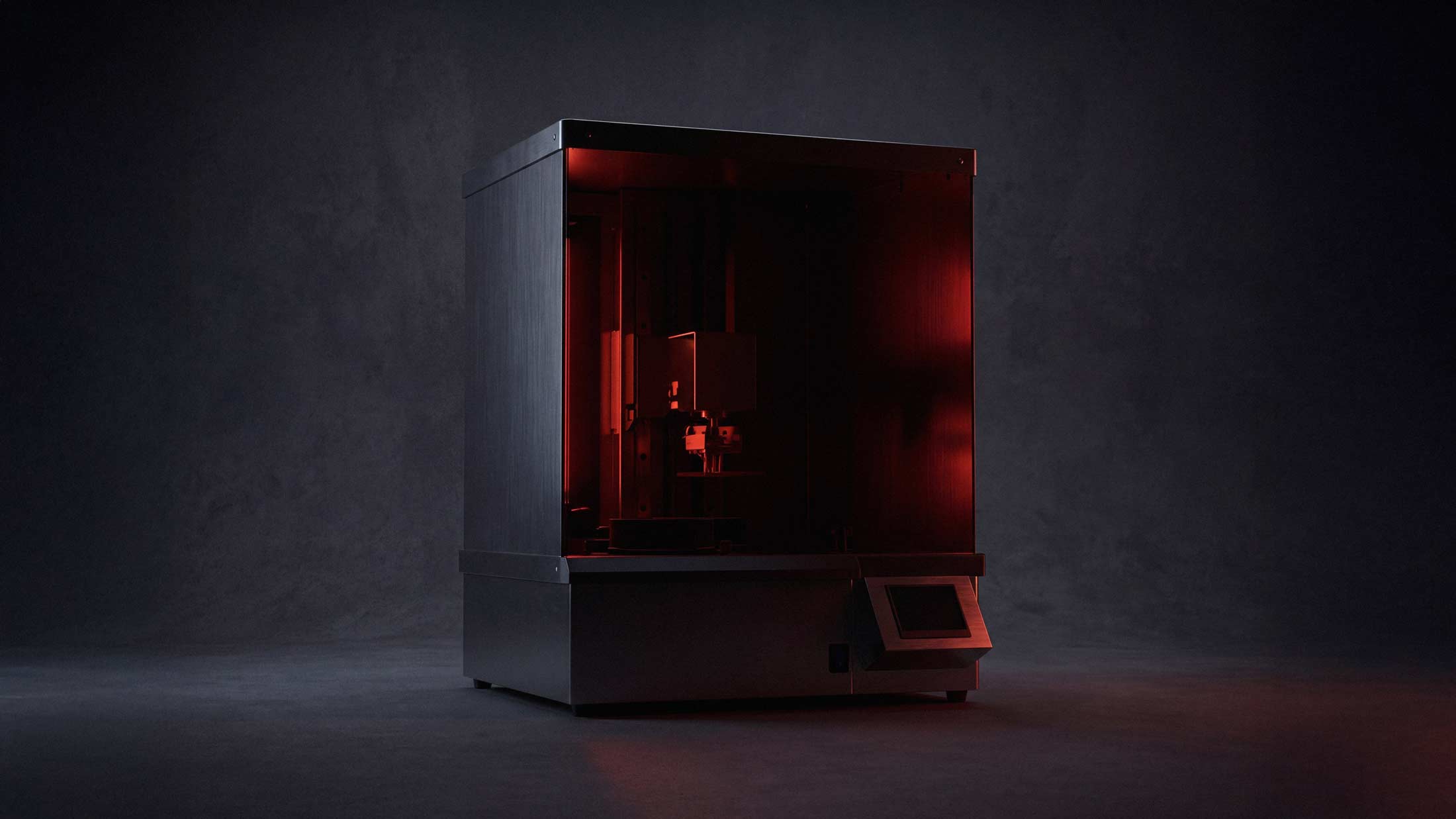
A new category of additive manufacturing has arrived. Polysynth, a startup backed by Founders Inc., is now taking pre-orders for the P1 Printer, which the company calls the first multi-material resin 3D printer. The machine can combine up to eight materials in a single print job, switching between resins automatically using a proprietary vat cleaning system that the company says resets between layers for cleaner material transitions and higher output fidelity.
That might sound incremental if you follow consumer 3D printing, where multi-color filament systems from Bambu Lab and Prusa have become mainstream. But multi-material resin printing is a fundamentally different problem. Photopolymer resins cure when exposed to UV light, and contamination between materials has historically made clean transitions nearly impossible without manual intervention. Polysynth claims to have solved this with an automated cleaning mechanism that prepares the vat for each new resin layer.
What It Actually Does
The P1 starts at $4,999 and can sequence through its material library automatically during a print. According to Polysynth, users can switch materials mid-print without post-processing or assembly, which collapses what was previously a multi-step fabrication workflow into a single operation.
The company is highlighting several application areas. For electronics, the P1 can work with conductive resins to embed circuits directly into printed parts. Polysynth markets this as a way to produce functional electronics without wiring or soldering. For clinical and dental workflows, the machine supports biocompatible resins with what the company describes as micron-level precision, targeting labs that need accuracy and repeatability.
Polysynth was founded in 2025 by Eric Potempa, who has spent years developing resin 3D printing systems including work on water-dissolvable supports. The company appears to be building specifically for dental labs, though the underlying technology could extend to broader industrial prototyping.
Why Multi-Material Resin Matters
The ability to combine functionally different materials in a single print opens use cases that were previously impractical. Consider a wearable sensor: today, you would print the housing in one material, print or fabricate the sensing element separately, then assemble and wire the components. With multi-material resin printing, you could theoretically print the entire device in one pass, with flexible sections where needed, rigid structure elsewhere, and conductive traces integrated into the geometry.
Dental labs present an obvious early market. Modern dental workflows already rely heavily on resin printing for models, surgical guides, and prosthetics. But producing a complete denture, for example, still requires multiple print jobs with different materials followed by assembly. A machine that can combine rigid tooth-colored resins with softer gum-toned materials in a single print could meaningfully compress production time.
Research into conductive 3D printing resins has accelerated over the past several years. Silver nanoparticle inks can achieve high conductivity, and carbon nanotube composites have shown promise for creating structural electronics where the circuitry is embedded directly into the printed object. But these materials have been limited by the single-material constraints of most resin printers. A machine that can layer insulating and conductive resins in the same job removes one of the key barriers.
The Harder Questions
Polysynth's claims are ambitious, and some questions remain. Material compatibility across eight resins in a single print introduces significant complexity. Cure times, layer adhesion between different polymers, and long-term mechanical performance of hybrid parts are all variables that require validation beyond marketing demonstrations.
The $4,999 starting price positions the P1 as a professional tool rather than a hobbyist device. That pricing makes sense for dental labs or R&D teams, but it also means the technology will need to prove itself in demanding production environments before it scales further.
The broader trajectory matters more than any single product. If multi-material resin printing works at scale, it could begin to blur the line between additive manufacturing and electronics assembly. The potential to print complete devices, with sensors, circuits, and mechanical structures unified in a single fabrication step, has been a goal of advanced manufacturing research for years. Polysynth is betting it can deliver that capability in a commercial package.
Pre-orders are open now through the company's website. Shipping timelines have not been publicly disclosed.