For a decade, robots and autonomous vehicles have relied on a clumsy workaround: mount a lidar for depth, bolt on a camera for color, then burn engineering hours calibrating and fusing two fundamentally different data streams. Ouster says that era is over.
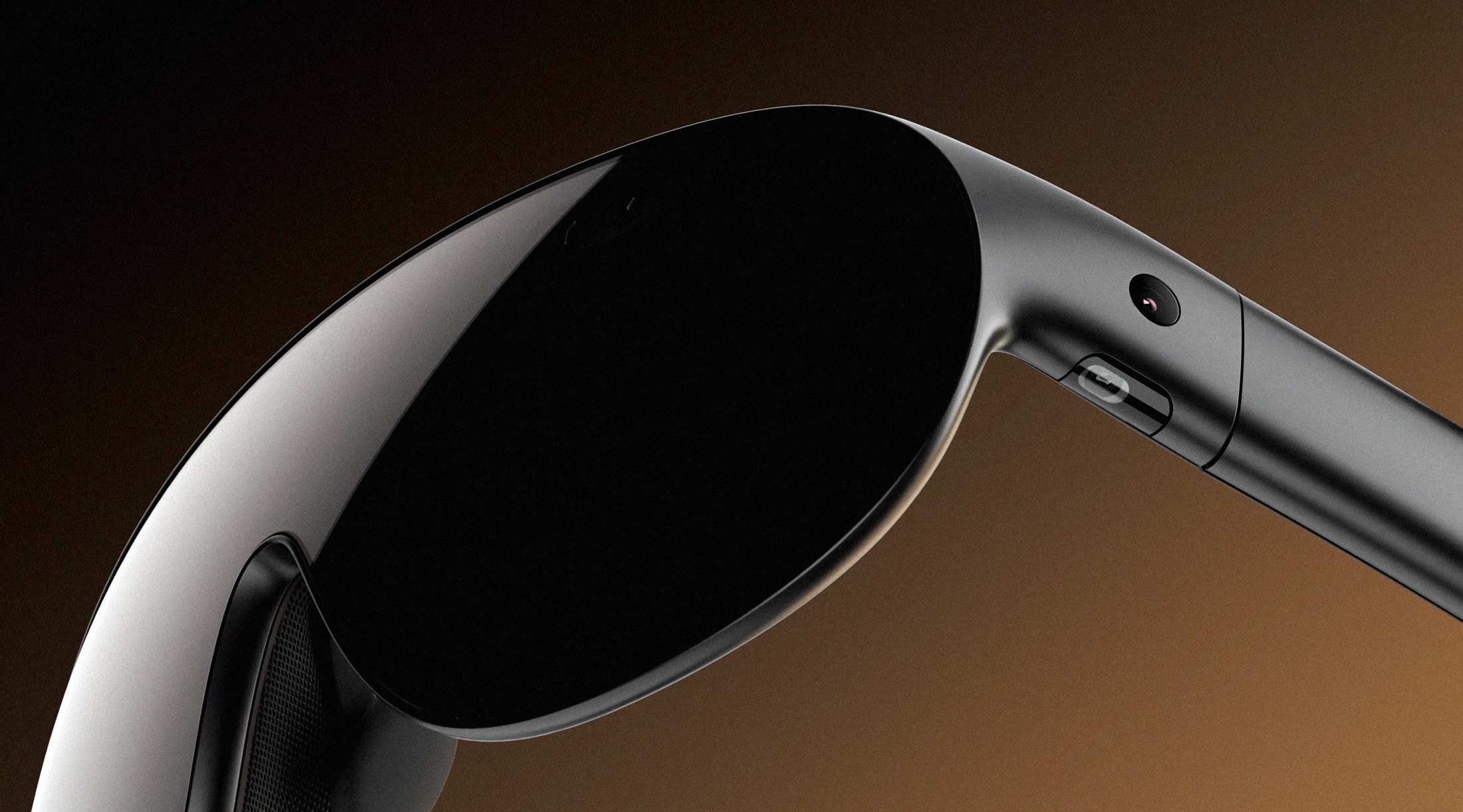
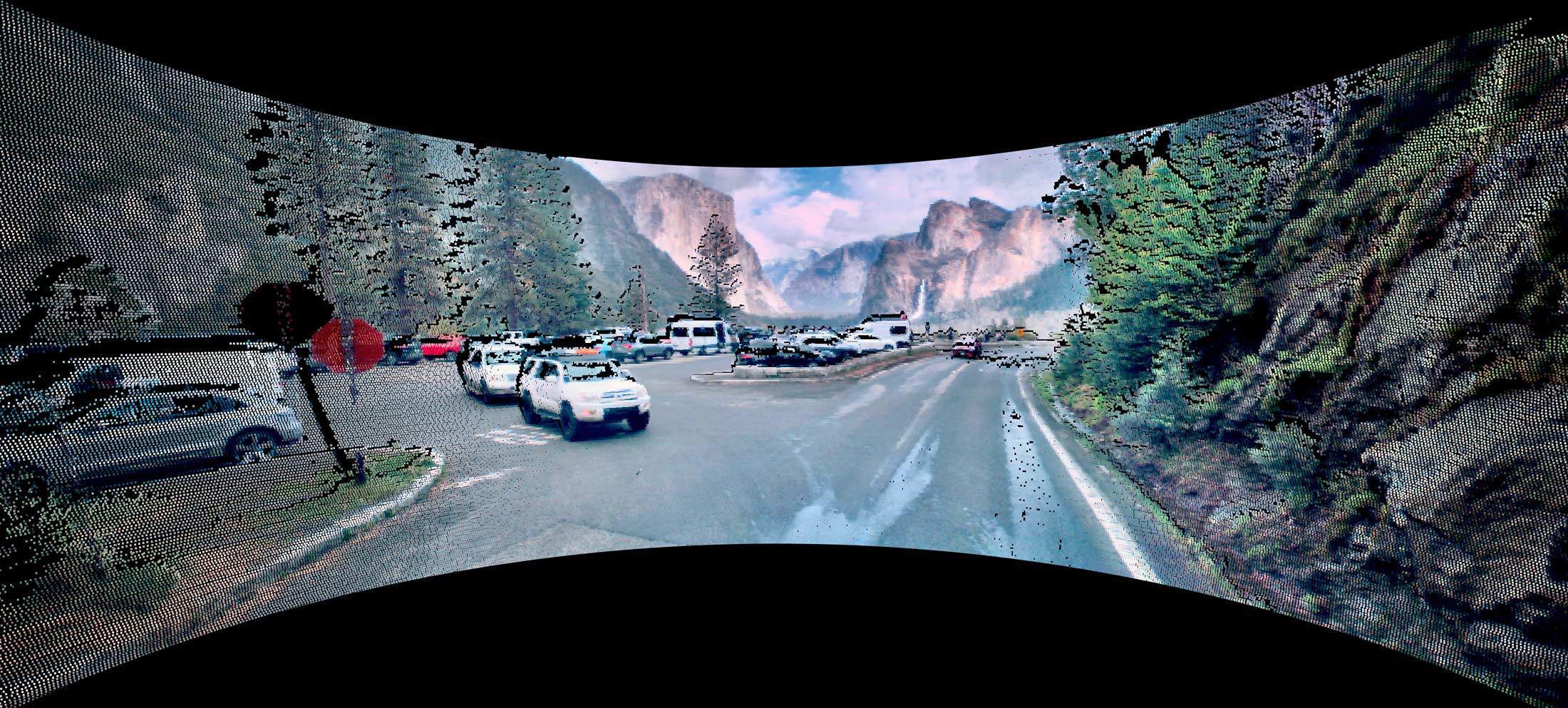
The San Francisco-based sensor maker announced its REV8 OS family on Monday, billing it as the world's first native color lidar. The new sensors capture three-dimensional depth and color imagery simultaneously on the same chip, delivering a pre-fused data stream that eliminates the spatial and temporal alignment problems that have plagued multi-sensor stacks since self-driving vehicles first hit public roads.
What Makes It Work
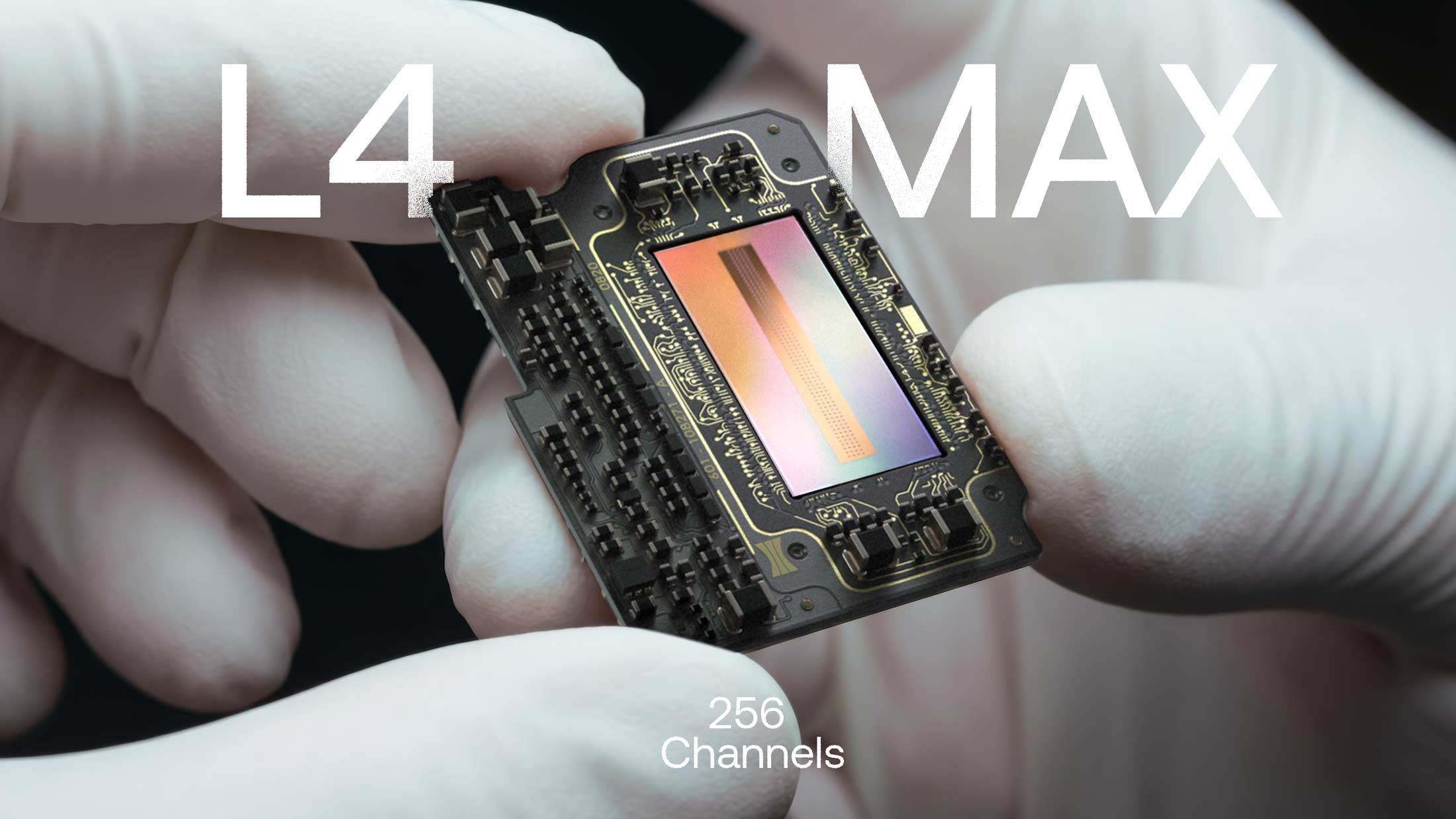
Ouster's architecture uses single photon avalanche diode (SPAD) detectors, capturing lidar information directly on its custom chip instead of the analog approach used by many competitors. The company is now using this same SPAD technology to capture color image data in the REV8 sensors.
The imaging specs are substantial: 48-bit color, 116 dB of dynamic range, and megapixel resolution. CEO Angus Pacala claims the system improves in many ways on a modern camera thanks to the way Ouster already designs and builds its sensors.
The flagship OS1 Max is positioned as the lineup's headliner. Pacala said he considers it "the industry's best long range lidar," noting it can see 500 meters in all directions and is smaller than competing long-range sensors "by a big margin." Other new sensors built on the REV8 platform include the OS0, OS1, and OSDome.
Why This Took a Decade
Pacala called the development "the holy grail of what a roboticist has always wanted," noting that the project has been a decade in the making.
The delay was not for lack of ambition. When Ouster began developing digital lidar in 2015, the state-of-the-art detectors and lasers would have produced a sensor with a range of only a few meters. SPAD efficiency has improved dramatically since then. Early SPADs were only 2-5% efficient, but newer generations have reached 20-30% efficiency, with efficiencies up to 80% possible as the technology matures.
The sensor fusion problem itself has been notoriously difficult to solve at the system level. Extrinsic calibration, which determines the transformation between sensor coordinate frames, requires eliminating spatial mismatches due to frame discrepancies. Even small calibration errors can lead to significant misalignment in cross-modal data fusion.
Different sensors operate at different frequencies with internal clocks that drift relative to each other. For a vehicle traveling at 60 mph, a 50ms time discrepancy between camera and lidar corresponds to a positional error of over 1.3 meters.
By putting both sensing modalities on the same silicon, Ouster sidesteps these integration headaches entirely. The approach puts lidar and imaging tech on the same chip, dramatically cutting down on the work customers have to do to make sense of competing sensor streams while being cheaper and smaller than previous technology.
Applications and Market Timing
The REV8 arrives as the market for sensors is exploding. Waymo and others have deployed working robotaxis and are scaling quickly. Robotics companies, both humanoid and industrial, are absorbing investment dollars and need sensors to perceive the world.
A color lidar that combines pinpoint depth information with camera-quality image data could be especially valuable to robotics players. The pre-fused data stream simplifies perception pipelines for everything from ground-level autonomous robots to warehouse automation systems to humanoid training facilities.
Pacala expects applications in high-speed robo-trucking, robotaxi systems, and drones to transition to the OS1 Max.
The Competitive Landscape
The lidar industry has seen years of consolidation, with Ouster acquiring Velodyne and Luminar's assets recently getting acquired in bankruptcy. Ouster acquired Stereolabs in February 2026, adding cameras and AI compute to its sensing platform.
Ouster faces competition. Chinese company Hesai announced its own color lidar platform last month, claiming it will enter mass production by year-end. Other companies like Innoviz have previously pitched their own versions of "color lidar."
Pacala draws a distinction. Most other players trying to fuse cameras and lidar sensors are basically packaging them together in a box. The difference matters for downstream integration: pre-fused, pixel-aligned depth and color data versus two separate streams that require expensive software reconciliation.
Ouster has already shipped samples to existing customers and is now taking orders.
The sensor market has been littered with companies that promised revolutionary technology and failed to deliver at scale. Ouster's track record is more encouraging than most: the company has shipped over 25,000 lidar units and reported 12 consecutive quarters of product revenue growth. Whether the REV8 delivers on its promise of simplifying the perception stack for the next generation of robots and autonomous vehicles will depend on real-world performance data that is not yet available.