A research paper submitted to arXiv on April 24, 2026 presents AnemiaVision, a web-based system that screens for anemia using two smartphone photographs: one of the inner eyelid, one of the fingernail beds. The system achieves 96.2% validation accuracy and an AUC-ROC of 0.98.
The Problem It Solves
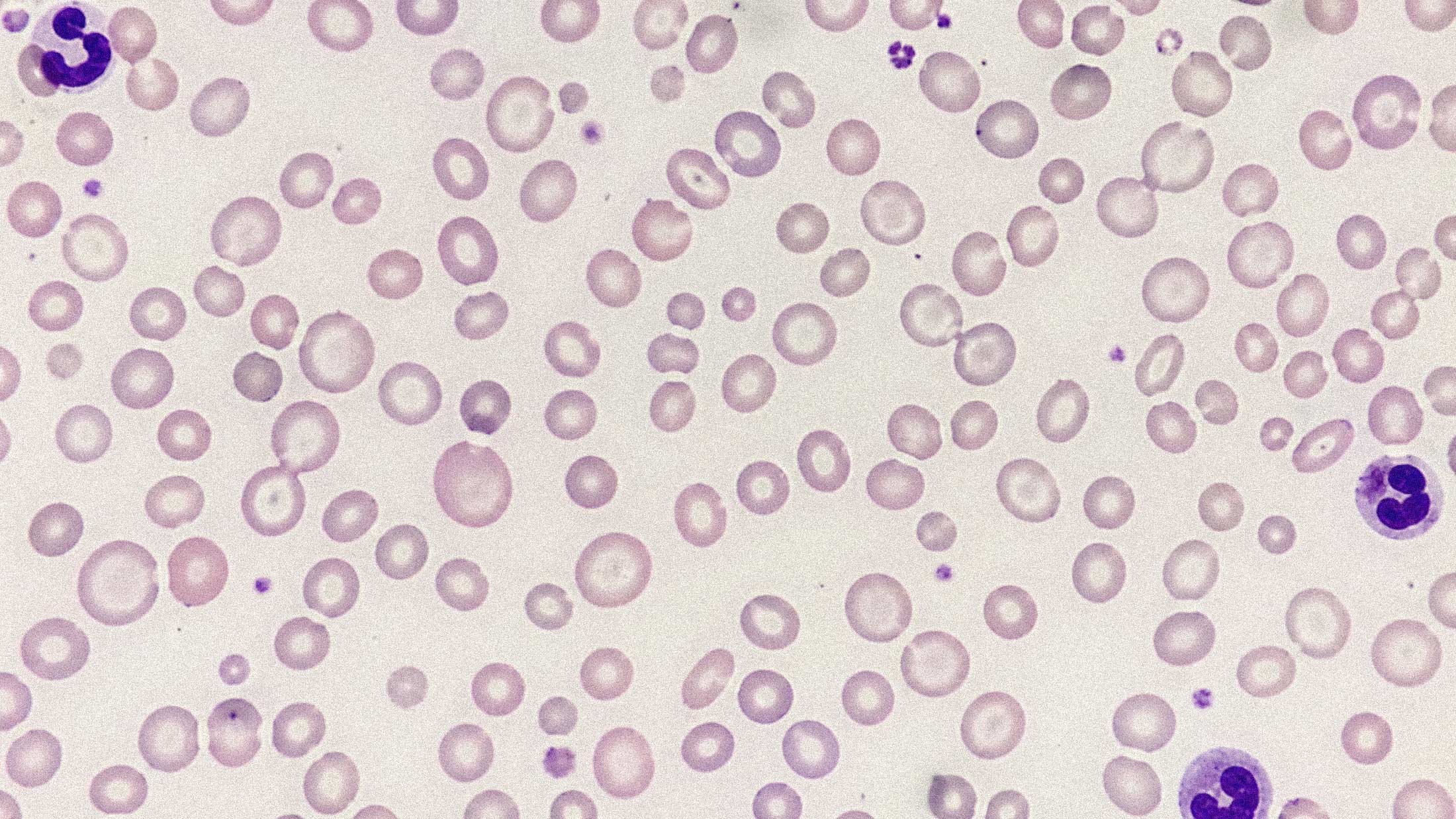
Anemia affects over one billion people globally and remains severely under-diagnosed in low-resource regions where laboratory blood tests are inaccessible. The Institute for Health Metrics and Evaluation puts the number even higher, noting that nearly 2 billion people are affected, more than low back pain or diabetes or anxiety and depression combined.
The condition quietly erodes quality of life. Fatigue, cognitive fog, complications in pregnancy, developmental issues in children. The standard diagnostic requires drawing blood and running a complete blood count. In rural Madhya Pradesh, rural Appalachia, or most of Sub-Saharan Africa, that test simply does not happen at scale.
How It Works
Anemia reduces hemoglobin concentration in blood flowing through highly vascular, melanin-free regions of the body, principally the palpebral conjunctiva (inner eyelid), fingernail beds, and palmar creases, causing visible pallor that can be captured by an ordinary smartphone camera. Clinicians have been using these visual signs informally for decades. AnemiaVision automates the observation.
The pipeline fine-tunes a pre-trained EfficientNet-B3 backbone with a redesigned three-layer classifier head incorporating BatchNorm, GELU activations, and high-rate Dropout. Training employs four orthogonal accuracy-boosting techniques: TrivialAugmentWide for policy-free image augmentation, RandomErasing for spatial regularization, Mixup for inter-class smoothing, and cosine-annealing scheduling with linear warmup.
Ablation experiments demonstrate that accuracy-first early stopping contributes +1.6% and Mixup contributes +2.8% to final validation accuracy. The technical contribution here is less about novel architecture than about careful optimization.
Deployment-Ready Design
A production-grade Flask application with persistent PostgreSQL patient history ensures that real-world multi-user deployments do not lose clinical records on redeployment. This is the kind of unglamorous detail that separates research demos from functional field tools.
In a rural primary healthcare setting, a community health worker with a smartphone can screen 30 to 40 patients per hour with no consumables and no blood draw. Positive screens are referred for CBC confirmation, reducing unnecessary laboratory load while ensuring high-risk individuals are not missed.
Sensitivity for the anemic class reaches 0.96, making the system suitable as a first-line screening tool for community health workers in rural settings.
What Comes Next
A prospective validation study at a primary health center in rural Madhya Pradesh is planned, enrolling 500 participants with CBC ground truth. Ethics approval is being sought from the institute review board. The system currently predicts anemia presence or absence but does not estimate hemoglobin level; a regression extension is planned.
The system is publicly accessible and source code is openly available. Researcher Rahul Patel has positioned this explicitly as a screening aid, not a diagnostic replacement. That framing is correct. But for the populations most affected by infrastructure gaps, screening is often the bottleneck.
Of all the AI-for-health research emerging from academic labs, this is the kind with the clearest pathway to changing outcomes. The biology is real. The interface is minimal. The accuracy is competitive with expensive alternatives. Pediatric clinics can flag at-risk kids without phlebotomy. Pregnancy programs can catch iron deficiency early. Public health workers can screen entire villages in an afternoon.