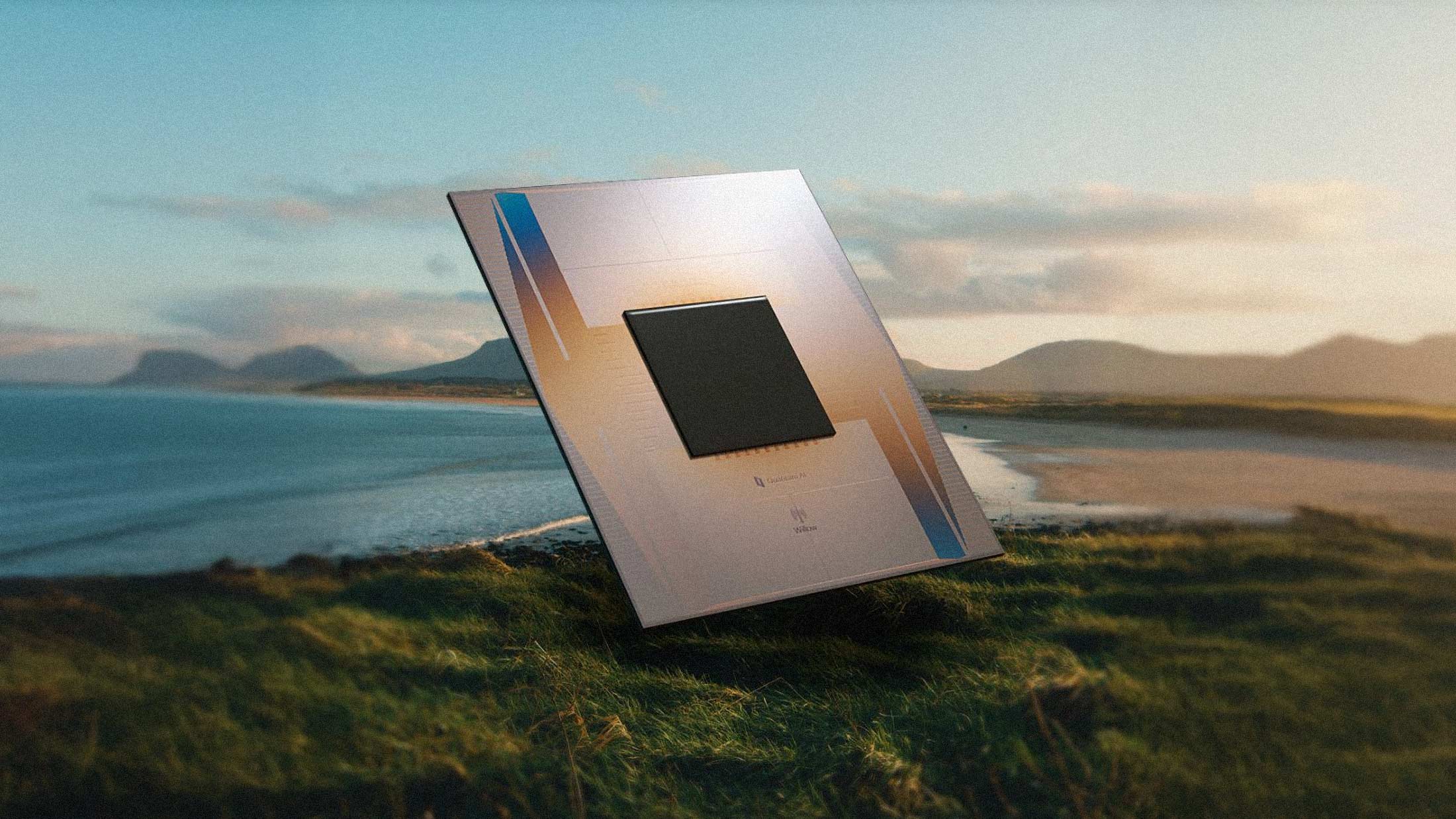
Google Quantum AI is opening its 105-qubit Willow processor to external researchers for the first time, accepting proposals through a new early access program that treats admission more like a grant competition than a product beta.
The Willow Early Access Program accepts submissions through May 15, 2026, with successful applicants notified by July 1. Selected researchers gain exclusive time on hardware that remains unavailable to the general public, running experiments designed specifically for Willow's architecture.
What Google Wants
The program is explicitly not interested in incremental simulations or generic quantum computing exercises. Applicants must propose quantum circuits tailored to Willow and identify measurable outcomes that could form the basis of a scientific publication. Google encourages numerical simulations to support proposals but wants teams to push beyond what classical systems can replicate.
Each accepted team must dedicate at least one researcher, typically a PhD student or postdoctoral fellow, to run the experiment. The selection criteria emphasize two factors: whether the proposed work is realistically executable given Willow's current noise levels and error rates, and whether success would yield meaningful scientific advances or introduce novel techniques.
In an unusual move, proposals must be submitted anonymously at the initial stage. No names, institutional affiliations, or team biographies are allowed. The structure suggests Google wants to judge proposals purely on scientific merit rather than the prestige of the submitting institution.
The Hardware
Willow is a superconducting quantum processor that Google unveiled in December 2024. The chip operates on 105 qubits with a mean T1 coherence time of roughly 68 microseconds, about five times longer than the company's earlier Sycamore processor. On a random circuit sampling benchmark, Willow completed a computation in under five minutes that would take the world's fastest supercomputers an estimated 10 septillion years.
The more significant achievement, however, is that Willow operates below the quantum error correction threshold. As more qubits are added, error rates actually decrease rather than compound. This was a theoretical goal dating back to Peter Shor's 1995 work on quantum error correction, and Willow is the first chip to demonstrate it in practice. That breakthrough is what makes external research on the platform scientifically valuable rather than just technically interesting.
Who Can Apply
The program is open internationally, with notable exceptions. Researchers whose employer or academic institution is based in China, Russia, Iran, Ukraine, or Belarus are barred from participating. Google uses a standardized intake form to verify institutional eligibility before proposals enter review.
This is not Google's first external partnership involving Willow. The company previously announced a collaboration with the UK's National Quantum Computing Centre, backed by research grants of up to £250,000 and part of a broader £5 billion Google investment in the UK's AI and quantum ecosystem. The new program appears wider in geographic scope but narrower in focus, targeting individual experiments rather than ongoing institutional partnerships.
What It Means
The early access model reflects a broader trend in quantum computing: controlled, selective sharing of advanced hardware to extract high-value research while managing the constraints of still-developing systems. IBM, IonQ, and others have run similar programs. Google's approach leans harder on anonymization and scientific rigor, likely an attempt to surface novel ideas from outside the usual institutional networks.
For researchers, the opportunity is rare. Willow represents the current frontier of superconducting quantum hardware, and time on the processor could yield results publishable in top journals. For Google, the calculus is different: external experiments stress-test the chip, surface unexpected behaviors, and demonstrate that Willow is more than a lab prototype. As the company's broader hardware roadmap pushes toward commercially relevant applications, programs like this one help validate whether the technology is ready to leave the research bench.