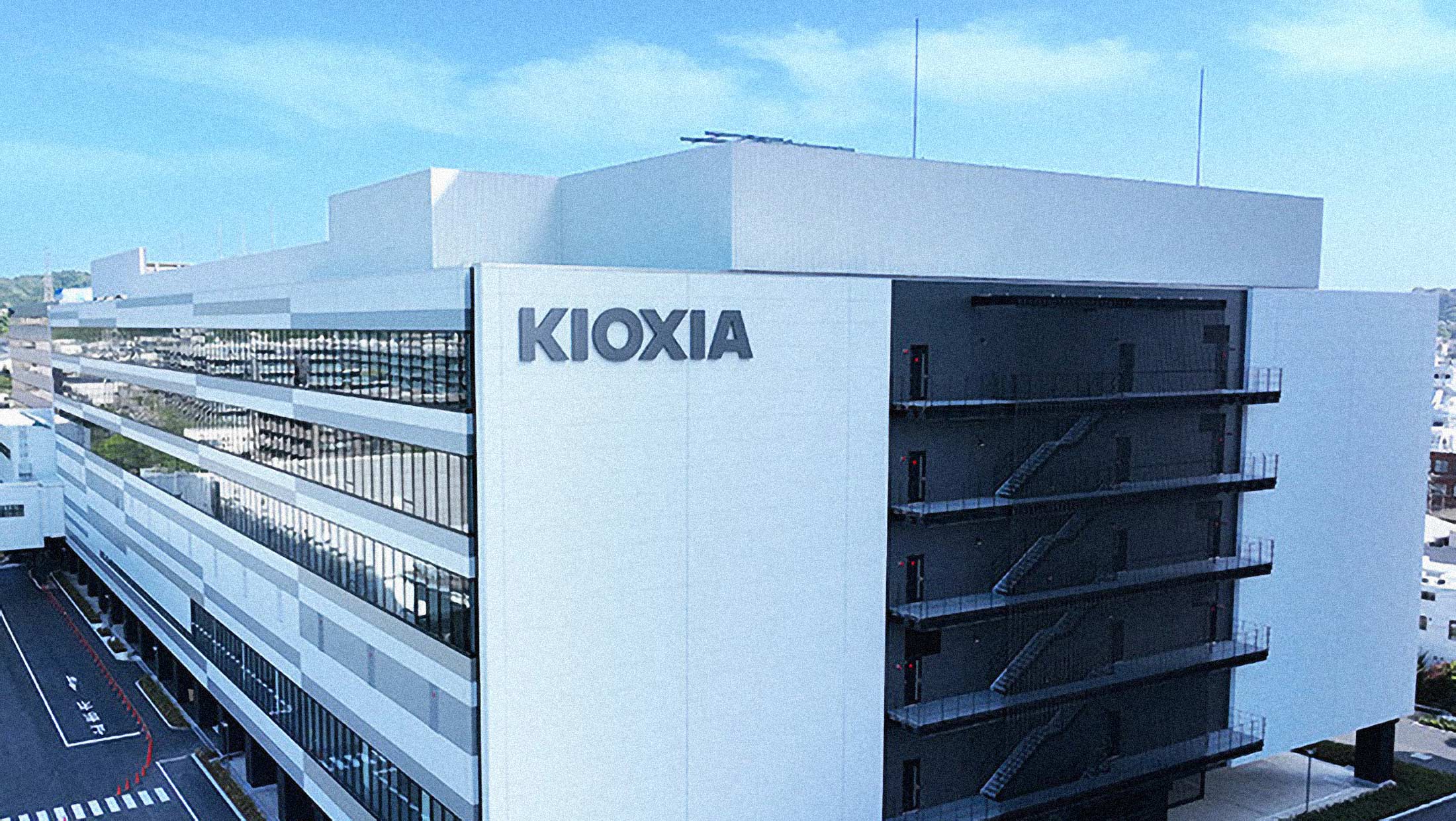
Kioxia Holdings reported financial guidance on Friday that would have seemed implausible a year ago: the company expects net profit for the April-June quarter to jump 48-fold year-on-year, reaching ¥869 billion. That figure more than doubles the ¥405.6 billion that analysts had projected.
Operating profit for the quarter is expected to hit ¥1.298 trillion, roughly $8.2 billion, while revenue should surge more than five times to ¥1.75 trillion. The numbers reflect a fundamental shift in how the memory market operates under the weight of AI infrastructure spending.
The Numbers Behind the Transformation
Kioxia already posted a record fiscal year ending March 2026, with consolidated net profit of ¥554.4 billion, roughly double the prior year. But even that understates how sharply profitability accelerated toward year-end. According to the company's earnings materials, fourth-quarter gross margin reached 66% and operating margin hit 60%. For context, full-year FY2026 gross margin came in at 47% and operating margin at 37%.
The company's stock has responded accordingly. Share prices have risen roughly 24-fold year-on-year and nearly five times so far in 2026. Kioxia's market capitalization now exceeds that of Sony and Fast Retailing, the parent company of Uniqlo.
The world's third-largest NAND supplier by market share, Kioxia operates nine fabrication facilities across Japan, seven in Yokkaichi and two in Kitakami. Most run through Flash Ventures, a joint venture with SanDisk in which Kioxia holds a 51% stake. Toshiba, from which Kioxia was carved out in a Bain Capital-led acquisition, still holds roughly 22% of the company.
Why Memory Became the Bottleneck
The profit explosion is a direct consequence of structural changes in the memory market. Gartner estimates NAND flash prices will increase 234% in 2026, with meaningful relief unlikely before late 2027. TrendForce reported that NAND Flash contract prices rose 70-75% quarter-over-quarter in Q2 2026 alone.
AI data centers are driving this repricing. Memory makers have reallocated capacity toward high-bandwidth memory for GPUs and enterprise SSDs for AI inference workloads. Kioxia's management has said the company's entire 2026 NAND production is already sold out.
According to Kioxia, NAND bit growth this year is expected in the high-teens percentage range, with supply constraints remaining the binding factor. Demand is projected to outpace supply into 2027, pointing to a tighter market ahead.
What Comes Next
Alongside the earnings forecast, Kioxia announced it is preparing to list American Depositary Shares on a U.S. exchange. The venue and timing have not been finalized, but the move signals confidence in the company's trajectory and an intent to broaden its investor base beyond Japan.
Korean rivals Samsung and SK Hynix have recently focused resources on high-bandwidth memory for AI processors, which has given Kioxia room to absorb more NAND orders. One analyst at Iwai Cosmo Securities noted that Kioxia's NAND carries production cost advantages of 20-30% over competitors, along with higher storage density and faster read-write speeds.
The company has not yet issued full-year guidance for fiscal year ending March 2027. Capital expenditure is planned at roughly ¥400 billion over the next year, a 40% increase but still below the historical peak. The funds will go toward adjusting existing equipment for product transitions rather than large-scale capacity expansion. This is helping keep supply tight across the industry.
For those tracking the compute demands of the AI era, Kioxia's results are a reminder that the infrastructure bottleneck extends well beyond GPUs. The memory market's repricing is reshaping the economics of everything that stores or processes data.