IonQ announced today the commercial launch of Interferometric Synthetic Aperture Radar (InSAR) capabilities through its space missions division, marking a significant expansion of the quantum computing company's Earth observation ambitions. The offering promises millimeter-precision ground deformation monitoring with fully automated tasking and data delivery, targeting applications across infrastructure monitoring, energy, insurance, urban development, and national security.
The service arrives less than a year after IonQ completed its acquisition of Capella Space, which gave the quantum computing firm access to a proven commercial SAR constellation. Capella was the first U.S. company to deploy commercial SAR satellites and has since grown into a significant provider of radar imagery for government and commercial clients.
What InSAR Actually Does
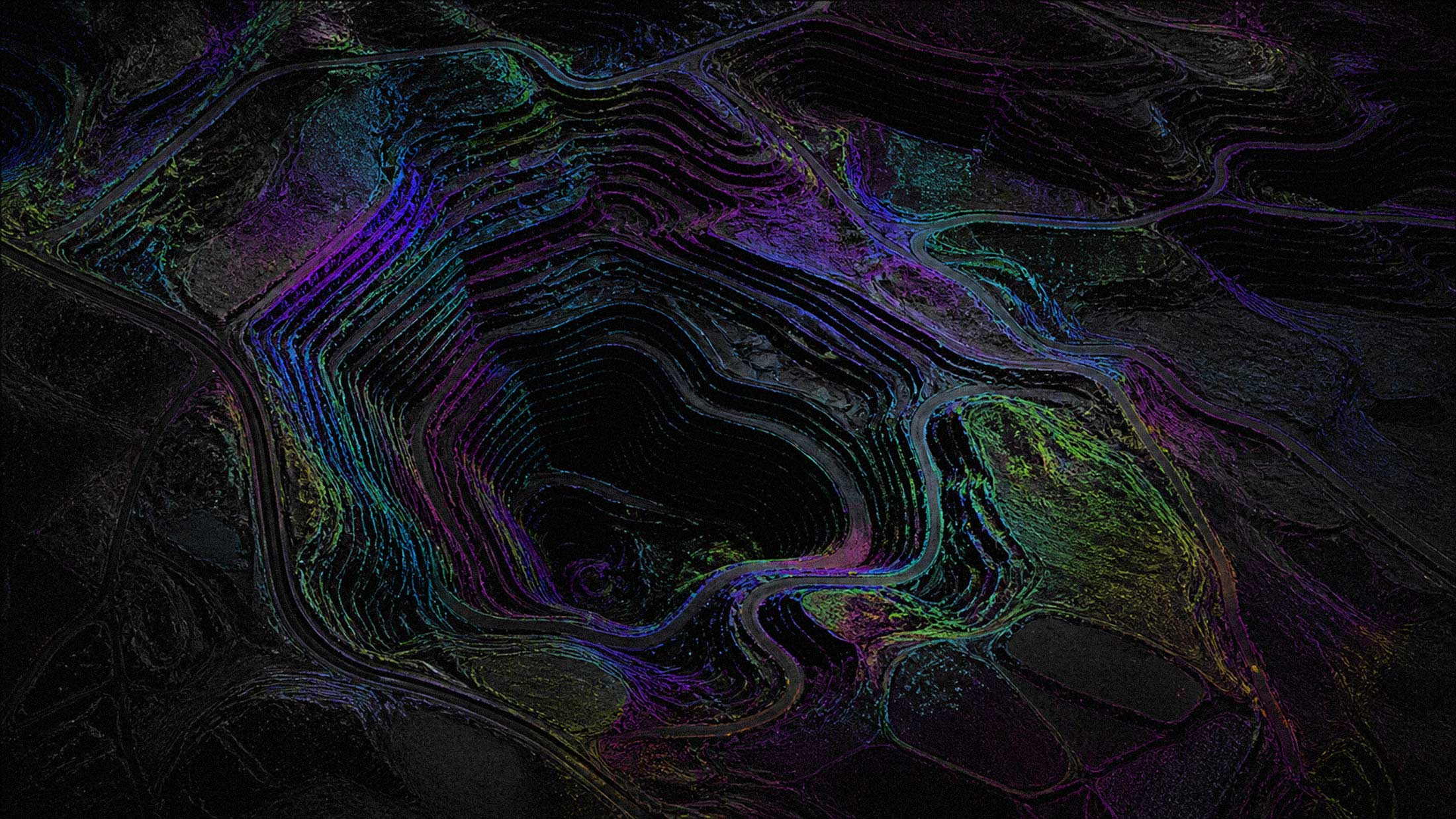
InSAR works by comparing radar images of the same area taken at different times to detect minute changes in ground elevation. The technology can measure surface movements down to the millimeter scale, making it useful for tracking phenomena invisible to optical satellites or even ground-based surveyors operating at conventional intervals.
According to the U.S. Geological Survey, InSAR has applications in monitoring volcanic activity, land subsidence from groundwater extraction, and structural stability of infrastructure. The technique operates through clouds and at night, a capability that sets radar-based observation apart from optical imaging.
Jordan Shapiro, IonQ President and General Manager of Quantum Platform, said the launch "expands IonQ's space mission and sensing capabilities, delivering persistent, change-monitoring intelligence from space."
Three-Day Repeat Cycle and Orbital Architecture
The new offering's key differentiator is its three-day repeat cycle, enabled by what the company describes as a unique orbital architecture combining mid-inclination and sun-synchronous orbits. This configuration allows for consistent acquisition geometry across passes, which is essential for accurate interferometric analysis.
Traditional InSAR services often require weeks or months to accumulate enough data for reliable time-series analysis. IonQ claims its approach can dramatically compress that timeline. The company points to a 2025 study over Mexico City that measured deformation rates exceeding 70 centimeters per year using 18 acquisitions over just seven weeks. The company says this establishes a new commercial benchmark for urban subsidence monitoring.
Mexico City serves as a compelling proof case. The capital, built atop an ancient lakebed, has been sinking for over a century due to groundwater extraction. Recent NASA-ISRO satellite data found parts of the region subsiding by more than two centimeters per month. InSAR monitoring has become critical for tracking damage to the city's metro system and broader infrastructure.
Enterprise and Consumer Implications
For enterprises, the immediate applications span several sectors. Energy companies could monitor pipeline integrity and detect ground movement that might stress critical infrastructure. Insurance firms could assess property risk with unprecedented granularity, potentially reshaping how policies are priced in subsidence-prone regions. Urban planners could track the health of bridges, highways, and buildings without deploying ground crews.
The technology could also benefit construction firms evaluating sites, mining operations tracking land stability, and agricultural enterprises monitoring soil conditions. Real estate developers might use the data to assess long-term ground stability before breaking ground on major projects.
Consumer applications remain more indirect but are no less significant. Better infrastructure monitoring means fewer catastrophic failures. Improved insurance risk modeling could translate to more accurate premiums. The data could inform decisions about housing development in regions where subsidence risk is poorly understood.
IonQ's Expanding Space Footprint
The InSAR launch represents one piece of IonQ's broader space strategy. The company acquired Capella Space for $311 million in stock in July 2025 with the stated aim of building a space-based quantum key distribution network. IonQ also acquired Vector Atomic in September 2025, adding quantum sensing capabilities for positioning, navigation, and timing applications.
In September 2025, the U.S. Department of Energy named IonQ as a new partner in its Quantum-in-Space Collaboration, alongside Honeywell and EPB. The initiative focuses on advancing commercialization of space-based quantum technologies.
IonQ now positions itself as a full-stack platform company spanning computing, networking, sensing, and security. The InSAR capability fits into this vision as a sensing product that complements its quantum hardware ambitions. Whether the integration of SAR imaging with quantum technologies yields the promised synergies remains to be demonstrated.
The automated tasking platform removes what has traditionally been a significant friction point in commercial Earth observation. Customers can set up repeat collections without manual coordination, and the system handles acquisition and delivery autonomously. For organizations requiring continuous monitoring rather than one-off imagery, this represents a meaningful operational improvement.
IonQ trades on the New York Stock Exchange under ticker IONQ. The company is headquartered in College Park, Maryland.